
Technical data



EDITION JUNE 2005
www.cavagnagroup.com
K
3
LPG VALVES & EQUIPMENT
DIVISION
The features described in this illustration do not bind the manufacturer.
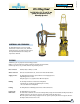
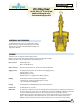
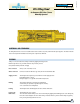
LPG Filling Head
for LPG Valves 16, 19 and 35 mm
(Jumbo and Kosanova valve)
Semi-automatically Operated
FEATURES
1. Balanced jig for easy suspension between filling operations.
2. Easy to connect and disconnect. Filling is initiated by opening of the pneumatic air supply.
3. Slim design makes it easy to handle and it fits easily inside any shroud.
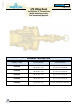
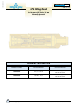
Inlet connection: LPG: ISO 228/1-G3/8
Pneum. air: ISO 228/1-G1/4
Outlet connection: Connects to Kosan LPG valves 16, 19 and 35 mm with and without SRV.
Supply pressures: The Filling Head is designed to operate within the normalsupply pressures.
Pneumatic supply: 4 - 6 bar.
Liquid filling product: 1-15 bar
Filling time approx. 5 sec./kg LPG at 7 bar differential pressure.
Marking: The following information is marked on the Filling Head:
•Monthandyearofproduction(posdatedbythreemonths).
•ThecodenumberoftheFillingHead.
Packing: The Filling Heads are individually packed in boxes without instructions.
Function and The Filling Head is easy to operate.
Maintenance: The head outlet is attached to the valve inlet manually. Once the pneumatic pressure is applied to the head it forces
the internal components of the head to move towards the valve top thereby establishing a leaktight connection and
once this is established the further movement of the components forces the valve spindle to open and
simultaneoulsly the gas starts to flow. When the cylinder is full the filling is stopped by removing the pneumatic
pressure. The internal springs of the head allows the valve to close and moves the components of the head
bakwards to stop the flow of gas and to disconnect the head from the valve. The head is removed manually.
MATERIALS AND STANDARDS
The Filling Head is made of corrosion-resistant materials such as
stainless steel, brass, aluminium and special polymers. The rubber
materials used are developed and manufactured according to the
requirements of EN 549.