
Instruction manual



Maximum Series Portable Chiller : Air & Water-Cooled : M1 Series Instrument
Page: 57
ADVANTAGE ENGINEERING, INC.
525 East Stop 18 Road Greenwood, Indiana 46142
317-887-0729 Fax: 317-881-1277
Service Department Fax: 317-885-8683
Email: service@AdvantageEngineering.com
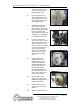
Controlled by the instrument, this
valve closes when the compressor
cycles off to prevent refrigerant
liquid from migrating to the
evaporator. The valve opens when
thecompressorcycleson(gure
6.2E).
E. REFRIGERANT SIGHT GLASS:
The refrigerant sight glass indicates
refrigerant charge and moisture
content(gure6.2F).
• Full refrigerant charge is
determinedbyaclearliquidow.
• Bubbles indicate low refrigerant.
• Moisture content is indicated by
the color of the element.
• Element color is normally green.
• If the color of the element is
chartreuse or yellow, the system
has been contaminated with
moisture.Insuchcase,thelter-
drier must be replaced. The
replacementofthelter-drier
mustbecompletedbyaqualied
refrigerant service technician.
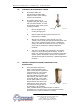
F. EXPANSION VALVE: The
expansionvalvethrottlesowof
refrigerant liquid into the evaporator
and creates a pressure drop in the
refrigerant system that allows the
liquid refrigerant to “boil off” inside
theevaporator(gure6.2G).
G. EVAPORATOR: The evaporator is a
brazed plate heat exchanger where the
refrigerant liquid is allowed to evaporate
(boil off) to absorb heat (BTU) from the
processuid.Astheheatisabsorbed,the
processuidischilled(gure6.2H).
H. CAPACITY CONTROL SOLENOID: The
chiller is equipped with a capacity control feature. The capacity
control feature matches the chiller capacity to the cooling load to
provide temperature control and to prevent short cycling of the
compressor. Units with digital scroll compressors (M1D) use a
Expansion Valve
Figure 6.2G
Refrigerant sight glass
Figure 6.2F
Typical liquid line solenoid
valve
Figure 6.2E
Typical brazed
plate evaporator
Figure 6.2H