
User`s guide




Making a Return Loss Measurement Getting Started with Return Loss
Agilent 81610A/11A/12A/13A/14A Return Loss Module, Fifth Edition 21
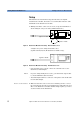
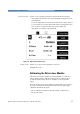
Set Averaging Time 3 Move to the [AvgTime] parameter (the measurement averaging
time). Make sure that the selected averaging time is suitable for your
measurements.
Use an averaging time of at least 200 ms, but increase this to at least
1 s for return losses greater than 50 dB. Longer averaging times give
more accurate results, but reduce the speed at which the
instrument can complete a measurement.
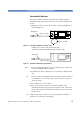
Figure 10 Agilent 8161x Details Screen
Set Wavelength 4 Move to [
λ
], then set this parameter to Extern.
5 Enable the source.
Calibrating the Return Loss Module
Whenever a Return Loss module is in the mainframe, a return loss
value is displayed. The calibration values used are either the most
recently measured, where these are available, or factory default
values.
If you are unsure of any of the calibration values that you are using, or
if you have changed the measurement setup, take the appropriate
calibration measurements again.
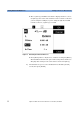
• First, calibrate the return loss module against a component of
known reflectance.