
Specifications




ST72104Gx, ST72215Gx, ST72216Gx, ST72254Gx
62/141
SERIAL PERIPHERAL INTERFACE (Cont’d)
11.3.4 Functional Description
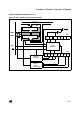
Figure 1 shows the serial peripheral interface
(SPI) block diagram.
This interface contains three dedicated registers:
– A Control Register (CR)
– A Status Register (SR)
– A Data Register (DR)
Refer to the CR, SR and DR registers in Section
0.1.7 for the bit definitions.
11.3.4.1 Master Configuration
In a master configuration, the serial clock is gener-
ated on the SCK pin.
Procedure
– Select the SPR0 & SPR1 bits to define the se-
rial clock baud rate (see CR register).
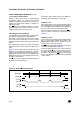
– Select the CPOL and CPHA bits to define one
of the four relationships between the data
transfer and the serial clock (see Figure 4).
–The SS pin must be connected to a high level
signal during the complete byte transmit se
-
quence.
– The MSTR and SPE bits must be set (they re-
main set only if the SS pin is connected to a
high level signal).
In this configuration the MOSI pin is a data output
and to the MISO pin is a data input.
Transmit sequence
The transmit sequence begins when a byte is writ-
ten the DR register.
The data byte is parallel loaded into the 8-bit shift
register (from the internal bus) during a write cycle
and then shifted out serially to the MOSI pin most
significant bit first.
When data transfer is complete:
– The SPIF bit is set by hardware
– An interrupt is generated if the SPIE bit is set
and the I bit in the CCR register is cleared.
During the last clock cycle the SPIF bit is set, a
copy of the data byte received in the shift register
is moved to a buffer. When the DR register is read,
the SPI peripheral returns this buffered value.
Clearing the SPIF bit is performed by the following
software sequence:
1. An access to the SR register while the SPIF bit
is set
2. A read to the DR register.
Note: While the SPIF bit is set, all writes to the DR
register are inhibited until the SR register is read.