
Troubleshooting guide


25
www.bendix.com 1-800-AIR-BRAKE (1-800-247-2725)
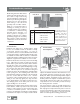
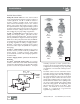
Spring Brake Valves
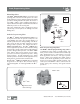
The SR-1
™
spring brake valve is used in dual circuit
brake systems and serves two functions; during normal
operation, it limits hold-off pressure to the spring brakes
to 90 or 95 psi. If a loss of pressure occurs in the rear
service brake service supply, the valve will provide a
modulated spring brake application, proportional to the
driver’s service braking pressure delivered to the front
axle.
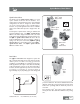
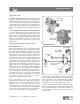
The Bendix
®
SR-7
™
spring brake modulating valve
is used in dual air brake systems with spring brake
actuators. It provides a rapid application of the spring
brake actuator when parking, modulates the spring
brake actuator application (using the dual brake valve
should a primary failure occur in the service brake
system) and prevents compounding of service and
spring forces.
Simple Spring Brake Anti-compound System
General Operation
Brake compounding can occur in a spring brake parking
system due to the direct in-line arrangement of both
the spring chamber and brake chamber. It occurs in
unprotected systems when parking AND service brake
applications are made at the same time. An example
of this situation occurs when a vehicle is parked on a
steep incline; the driver holds the service brakes applied
(preventing the vehicle from rolling backward), then
actuates the park control which "sets" or applies the
spring brakes. For a brief time, the air applied service
brakes and the mechanical spring brakes both exert a
braking force on the slack adjusters and foundation
brakes. The forces of the spring and air applications
are additive and can cause damage to the foundation
brake components (cam shaft splines, shoes, drum, etc.)
and/or slack adjuster. An anti-compounding system is
especially important in protecting the adjusting
mechanism of automatic slack adjusters from damage
caused by over-torque that occurs during a
compounded application of the brakes.
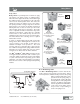
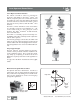
Anti-compounding prevents the simultaneous
application of both the air and spring brakes by directing
application air to the spring brakes when both are
applied at once. In the simple anti-compounding
schematic shown here, the double check valve allows
service application air to apply the service brakes AND
move into the spring cavity if they are also applied (no
air pressure and springs are also applying brakes).
Park Control
Valve
Spring Brake
Parking Quick
Release Valve
Service
Brake
Valve
Service Quick
Release Valve
Double
Check
Valve
SR-7
™
Spring
Brake Valve
SR-1
™
Spring
Brake Valve
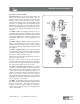
The anti-compounding function of the double check
valve is built into several air brake devices such as the
SR-7
™
, R-7
™
, R-8
™
, R-14
™
and QR-1C
™
valves. When
these devices are used in the system, a separate double
check valve for anti-compounding is not needed.
It is recommended that the service connection to the
anti-compounding device (double check valve) come
from a point between the service brake chamber and
the first "upstream" service device (in this case a quick
release valve).
Spring Brake Valves