
Troubleshooting guide


48
www.bendix.com 1-800-AIR-BRAKE (1-800-247-2725)
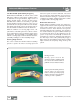
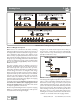
FIGURE 3 Effect of Weight and Speed on Braking Force Required
(Note: For illustration the Figure above shows horses; however in this case we are illustrating the effect of forces, not horsepower amounts, as in Figure 2.)
Braking Force
Effect of Weight and Speed
Other factors to be considered are the effects on braking
when the weight and speed of a vehicle are increased. If
the weight of the vehicle is doubled, the energy of motion
to be changed into heat energy is also doubled. If the
brake cannot properly dissipate and absorb the increased
heat caused by the vehicle weight (in excess of the vehicle
design spec’s), poor braking performance will result. Brake
systems are designed to properly control a vehicle loaded
up to its gross vehicle weight (GVW). Never exceed the
GVW for a vehicle.
The effect of higher speeds on braking is much more
significant. Comparing stops from a speed of 20 miles per
hour with stops from a speed of 40 miles per hour,
engineering calculations show there is actually four times
as much energy of motion to be changed to heat energy
during a stop from 40 miles per hour as there is during a
stop from 20 miles per hour. Thus, if the speed is doubled,
four times as much stopping power must be developed,
and the brakes must absorb or dissipate four times as
much heat. If the speed is three times higher, the stopping
power needed is nine times higher.
It naturally follows that if both the weight and speed
of a vehicle are doubled, the stopping power must
be increased eight times and the brakes must absorb
or dissipate eight times as much heat.
Another way of illustrating the effect of speed on stopping
ability is to compare the stopping distance if the speed is
increased without increasing the weight.
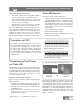
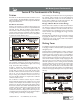
In Figure 4, the vehicle shown stops from 20 miles per
hour in 30 feet. At 40 miles per hour it would typically
require 120 feet to stop, and 60 miles per hour it would
typically need 270 feet to stop.
FIGURE 4 - Effect of Speed on Stopping Distances
Introducing both weight and speed into the comparison
again, a 10,000 pound vehicle traveling 60 miles per hour
has 18 times as much energy of motion as a 5,000 pound
vehicle traveling at 20 miles per hour. If the same stopping
power is used, a 5,000 pound vehicle which stops from 20
miles per hour in 30 feet, when loaded to 10,000 pounds
and is traveling at 60 miles per hour will require 18 times
(540 feet), or more, to stop. Note: Many other factors,
including the road surface, brake friction material and tire
condition, etc. would also affect the stopping distance.