
Troubleshooting guide

52
www.bendix.com 1-800-AIR-BRAKE (1-800-247-2725)
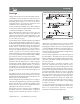
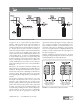
FREE SPRING – FREE AIR
The energy of compressed air is best compared to the
energy of a coiled spring. Figure 8 shows a coiled spring in
its free position and air in its free or atmospheric state.
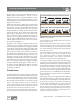
COMPRESSED SPRING – COMPRESSED AIR
When the spring is compressed, as shown in Figure 9,
energy is stored in it. Similarly when free air is compressed,
energy is stored in the air. This energy can be used to do
work, and due to the flexibility of air such energy can be
stored in a relatively small space.
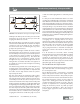
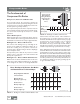
See Figure 10. If two reservoirs are connected and one
contains air above atmospheric pressure and the other
contains air at only atmospheric pressure, air will flow
from the reservoir with the higher pressure until the
pressures in both reservoirs equalize or until the flow is
interrupted by some outside force, such as the closing of
a valve in the connecting line. This is similar to the action
of liquids, except that pressure is the controlling medium,
whereas, the force of gravity would ordinarily be the
controlling medium in the case of liquids.
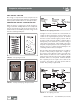
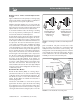
We saw earlier that normal atmospheric air is really at a
pressure of 14.7 pounds per square inch. In Figure 11,
the reservoir on the right has a volume of six cubic feet.
When another six cubic feet of air is added into it, the
gauge pressure of the air in the reservoir, which originally
read zero, will rise to 14.7 pounds. It follows that each
time a quantity of free air equal to the volume of the
reservoir is forced into it, the gauge pressure will rise
another 14.7 pounds per square inch.
FIGURE 8 - Free Spring / Free Air
FIGURE 9 - Compressed Spring / Compressed Air
FIGURE 10 - Free Spring / Free Air
FIGURE 11 - Free Spring / Free Air
Properties of Compressed Air