
Troubleshooting guide

57
www.bendix.com 1-800-AIR-BRAKE (1-800-247-2725)
II. Mechanical Systems
General
Vehicle manufacturers must also comply with Government
regulations for braking performance (e.g. U.S. FMVSS 121,
Canadian CMVSS121). As with the air or pneumatic side
of the system, the vehicle manufacturer must carefully
design the brake geometry, size and power of the
foundation brake components to achieve the desired
vehicle performance. Maintenance personnel must likewise
strive to maintain this performance.
Actuators
Brake chambers convert air pressure into mechanical force.
Always maintain the chambers to their original
performance condition. If chamber return springs need
replacement, the springs should be replaced with springs
of the proper spring load. When replacing, remember
the chamber return spring affects the net force delivered
by the chamber, and is especially important in low service
brake applications. For this reason always replace the
return spring on both chambers on an axle.
Chamber diaphragm life will vary according to the type of
service and the diaphragm environment. Experience will
generally dictate replacement frequency, and it is good
practice to replace all diaphragms on the vehicle at the
same time.
Also, in the case of S-Cam brakes, make sure the chamber
push rods are in line with the slack adjusters. If misaligned,
the chamber rod can rub on the chamber's non-pressure
plate and cause a dragging brake.
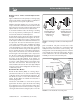
Another factor that influences the brake chamber output
force is the chamber push rod length. Ideally, the push
rod length should be adjusted so that when the chamber
reaches half its maximum stroke a 90 degree angle
(approximately) is formed between the slack adjuster and
chamber push rod.
Foundation Brakes
Braking torque is established by the vehicle manufacturer
and is determined by the designed axle weight. Brake size
(diameter), brake block or pad characteristics and the
foundation brake design (S-Cam, air disc, etc.) influence
brake torque. In the case of S-Cam brakes, the torque is
carefully evaluated in relation to drum capacity, drum area,
and lining area and in the case of air disc brakes, rotor/pad
specifications. It is recommended that you consult the
vehicle manufacturer before attempting any changes that
would affect brake torque.
Mechanical friction within the foundation brake can affect
brake output torque. The components of the foundation
brake are subject to high forces and should be periodically
checked and lubricated as necessary.
Friction material (e.g. brake block and lining segments, etc.)
affect vehicle stopping performance and are a factor in
wear balance from front to rear. Replacement material
should be chosen for its stopping performance as well as
wear characteristics. At a minimum, always replace friction
material on both ends of an axle whenever one side is
being serviced. For rear axles, it is recommended that
friction material on all axles be replaced at one time.
With air disc brakes, the rotor-friction couple is carefully
designed and validated for optimal performance. When
replacing air disc brake pads, always select replacement
pads that have been validated to perform with the rotor
used, in order to prevent premature or uneven pad wear
or damage to critical disc brake components (e.g. cracked
rotors) which can adversely affect braking performance.
Brake Adjustment
One of the most important factors in obtaining maximum
mechanical output of the chamber is proper brake
adjustment. All chamber strokes should be adjusted to
approximately the same stroke, and the adjustment should
be made so that the chamber stroke is as short as possible
without the brakes dragging. Improperly adjusted brakes
waste air, reduce leverage and contribute to poor brake
performance. In many cases, complaints of poor or
insufficient braking power can be taken care of by proper
brake adjustment.
Brake System Maintenance
Because no two vehicles operate under identical
conditions, maintenance and maintenance intervals will
vary. Experience is a valuable guide in determining the best
maintenance interval for any one particular vehicle.
In Section 9, Air Brake System Troubleshooting, you will
find some suggested tests for determining the overall
condition of the air brake system and to help quickly locate
problem areas. The tests check both leakage and device
function. Performing these tests on a quarterly basis and
recording the results of the tests in the vehicle maintenance
records would provide a valuable basis for performance
comparisons/trends and assist in deciding maintenance
intervals.
Air Brake System Balance: Mechanical Systems