
User's Manual


Navini Networks, Inc. Ripwave Base Station I&C Guide
19
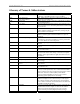
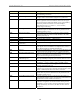
Term Stands For.... Meaning
TCC
1
Traffic Channel or
2
Transmission
Control Code
1
A portion of a radio channel used to enable transmission of one
direction of a digitized voice conversation (as opposed to the
Voice Channel).
2
A way of segregating traffic in order to define
controlled communities of interest among subscribers.
TCP
Transport Control Protocol A standardized transport protocol between IP-based network
nodes that allows two hosts to establish a connection and
exchange streams of data. TCP operates on top of Internet
Protocols and handles the multiplexing of sessions, error
recovery, reliability and flow; it guarantees packets are delivered
in the same order in which they were sent.
TCP/IP
Transport Control
Protocol/Internet Protocol
A set of protocols that allows cooperating computers to share
resources across the network. TCP provides the reliability in the
transmission, while IP provides connectionless packet service.
TDD
Time Division Duplex A digital transmission method that combines signals from
multiple sources and allows a single channel to alternately carry
data in each direction of a link.
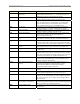
TFFS
True Flash File System Memory in a computing device that does not lose its information
when powered off. Available as a SIMM or PCMCIA card, it
usually stores router Operating System (OS) software. Can be
easily updated.
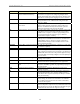
TTL
Time-to-live A field in the Internet Protocol that specifies how many more
hops a packet can travel before being discarded or returned.
Tx
Transmit To send by wire or other medium electronically or through air
via electromagnetic waves to a receiving communications device.
UBR
Unspecified Bit Rate One of the two service categories available for the Management
PVC in the ATM/T1 BTS configuration (the other one is CBR)
UDP
User Datagram Protocol A communications protocol that offers a limited amount of
service when messages are exchanged between computers in a
network that uses the Internet Protocol (IP). UDP is an
alternative to the Transmission Control Protocol (TCP.)
UL
UpLink Describes the direction of signal flow being sent from a
subscriber to a network system, as in from a mobile device
(Modem) to a base station.
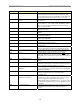
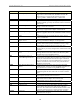
USB
Universal Serial Bus An external bus standard for plug-and-play interfaces between a
computer and add-on devices, such as a mouse, modem,
keyboard, etc. One USB port can connect up to 127 devices.
VCC
Virtual Channel Circuit AKA, Virtual Channel Connection or Virtual Circuit Connection.
A logical circuit made up of Virtual Channel Links, which carry
data between two end points in an ATM network.
VCI
Virtual Channel Identifier A 16-bit value in the ATM cell header that provides a unique
identifier for the Virtual Channel that carries that particular cell.
VCL
Virtual Channel Link A connection between two ATM devices.
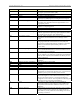
Vector
Vector A quantity representative of both magnitude and direction
(energy + orientation in space)
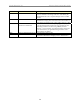
VPC
Virtual Private Channel AKA, Virtual Path Connection. A grouping of Virtual Channel
Connectors, which share one or more contiguous VPLs.
VP
Virtual Path A set of Virtual Channels grouped together between cross-points
(i.e., switches).