
Manual
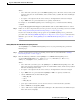
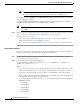
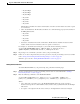
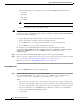
Table Of Contents
- Support for QSIG Over BRI and Q.931 Over BRI Backhaul
- Feature Overview
- Supported Platforms
- Supported Standards, MIBs, and RFCs
- Prerequisites for Using This Feature
- Configuration Tasks
- Provisioning Tasks
- Monitoring and Maintaining the Feature
- Configuration Examples
- Provisioning Examples
- Command Reference
- Reference Information
- Obtaining Documentation
- Documentation Feedback
- Obtaining Technical Assistance
- Obtaining Additional Publications and Information
- Glossary

Support for QSIG Over BRI and Q.931 Over BRI Backhaul
Provisioning Tasks
16
Cisco MGC Software Release 9.5(2)
Note If you are using the ETS_300_102 or Q931 protocol files, call reference should be set to 1.
If you are using the ETS_300_172 protocol file, call reference should be set to 2.
For example, to add an QSIG/Q.931 over BRI Backhaul signaling service named brisvc1, you would
enter the following command:
mml>prov-add:bripath:name="brisvc1",extnode="bri-3640-01",desc="BRI service to C2600",
mdo="ETS_300_172",side="network", custgrpid="V123", crlen=”2”
Note Up to 2000 QSIG/Q.931 over BRI Backhaul signaling services can be provisioned on your
Cisco MGC.
Step 3 If there are no other components that you need to provision, end your provisioning session as described
in the “Saving and Activating Your Provisioning Changes” section on page 10.
Otherwise, you have two choices:
• Proceed to the “Adding IP Routes (Optional)” section on page 16 if your Cisco MGC is on a
different subnet from the associated BRI voice gateway
• Proceed to the “Adding Backhaul TCP Links” section on page 17 if they are on the same subnet.
Adding IP Routes (Optional)
IP routes are required in your provisioning data if your Cisco MGC hosts are not on the same subnet as
the Cisco media gateways. To add IP routes, perform the following steps:
Step 1 If you do not already have an active provisioning session, start one as described in the “Starting a
Provisioning Session” section on page 9.
Step 2 Enter the following command to add an IP route:
mml>prov-add:iproute:name="name", desc="description", netmask=”mask”, nexthop=”nhop”,
ipaddr=”addr”, dest=”destination”
Where:
• name—The name you want to give to the IP route. The name can be as many as 20 characters long
and can contain numbers, letters, and the dash (-) symbol. The name should begin with a letter.
• description—An assigned name. It can be as many as 128 alphanumeric characters in length.
• mask—Subnet mask of the destination (optional). The value should be expressed as an IP address in
dotted decimal notation (default is 255.255.255.255).
• nhop—Next hop router host name, IP address, or one of the following property names defined in the
XECfgParm.dat file:
–
IP_NextHop
–
IP_NextHop2
–
IP_NextHop3
–
IP_NextHop4
–
IP_NextHop5