
User guide





11
TV, Audio & Assistive Listening Devices
212
Issue 51
Telephone 01737 247571 All prices exclusive of S&OP and VAT
Connevans
Email
sales@connevans.com
Information
www.connevans.info
Shop online
www.DeafEquipment.co.uk
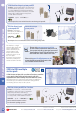
iPod & earphones
iPod & DPV lead
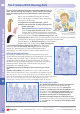
Many people who wear hearing aids every day are not aware that there
is a different way of using them, which provides reliable and high
quality sound, particularly for listening to music.
Shoes The majority of behind-the-ear hearing aids, including almost all those
in the current NHS range, have a direct input facility.
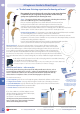
First you need the appropriate shoe, which will fit onto the bottom of your
hearing aid. You should be able to find the right shoe from those listed in
Section 2 of the catalogue. Keep in mind that many hearing aid models have
very similar names, but take different shoes. For example, there are different shoes for the
"Oticon Spirit 3" and the "Oticon Spirit 3 Superpower". If in doubt, please ask.
Hearing aid programmes It is important to note that the direct input facility may be available
on your hearing aid/s, but in some cases it may not be "switched on".
If it's necessary
, it will take your audiologist a matter of moments to activate the relevant
programme, so if you are unsure of whether or not you have the direct input facility you should
contact your hearing aid clinic or dispenser.
It can be well worth while taking the time to make an appointment with your clinic
so that you can have the chance to try using direct input for yourself.
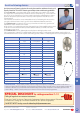
Direct input leads As you can see from Section 2, shoes come in all shapes and sizes, but
what they all have in common is that they have a standard three-pin socket on the bottom.
There are also different types of direct input lead depending upon where they are to be used.
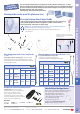
For use with personal listening equipment with a 3.5mm headphone socket
Connevans has
been able to produce leads which will work with any hearing aid shoe. The lead will only plug
into the shoe one way round, so it's impossible to connect up incorrectly. We have leads available
for people who have either one or two hearing aids, in a variety of different lengths and in black or
white.
At the other end of the personal stereo lead is a blue plug which is a standard 3.5mm plug
‒ this will fit almost all headphone sockets.
If you want to connect to a product with a larger socket, you probably just need a simple adapter (try
our handy headphone extension/conversion kit MX100321 from the next page)
If you have a Baha or a cochlear implant you can
still take advantage of the benefits of direct input,
you just need a different lead.
See Section 1c for more information.
Should you need any more information on direct
input or audio shoes, the Connevans Customer
Service Team will be pleased to help.
Direct input shoes
used with a personal
stereo direct input
leads allow you to plug
in anywhere that a pair
of headphones can go.
or "A whole new listening experience for hearing aid users"
A Beginners Guide to Direct Input
What you can listen to ‒ a few examples
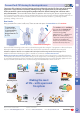
We normally think about using direct input leads with portable music devices, such as
personal CD players, MP3 players or iPods ‒ and they do work brilliantly for listening to
music or audio books. However, the direct input leads will work equally well with any
device that has a headphone socket. So how about trying these options too?
The leads can connect to:
your computer: get the best out of computer games, educational software or online videos.
a digital voice recorder: (see page 29) listen again to audio notes of meetings or lectures
a portable DAB radio: keep up with the news, the sports results or listen to the latest tunes
an electronic keyboard: hone your musical skills
a metal detector: track down buried treasure!