User manual


Reference page for
audio-equipment terms
17/05/2010 05:52
If you have read the last two reviews on my blog regarding Sony
STR-DA5500ES receiver and the Sony SRS-DB500 speakers and
found the audio terminology hard to understand. Ihave written
up areference sheet [1]that will help you understand these terms
properly.
Links
[1]
/reference/audio-reproduction-terms-reference/#utm_source=fee
d&utm_medium=feed&utm_campaign=feed
Product Review – Sony
SRS-DB500 2.1 active
speakers
17/05/2010 05:02
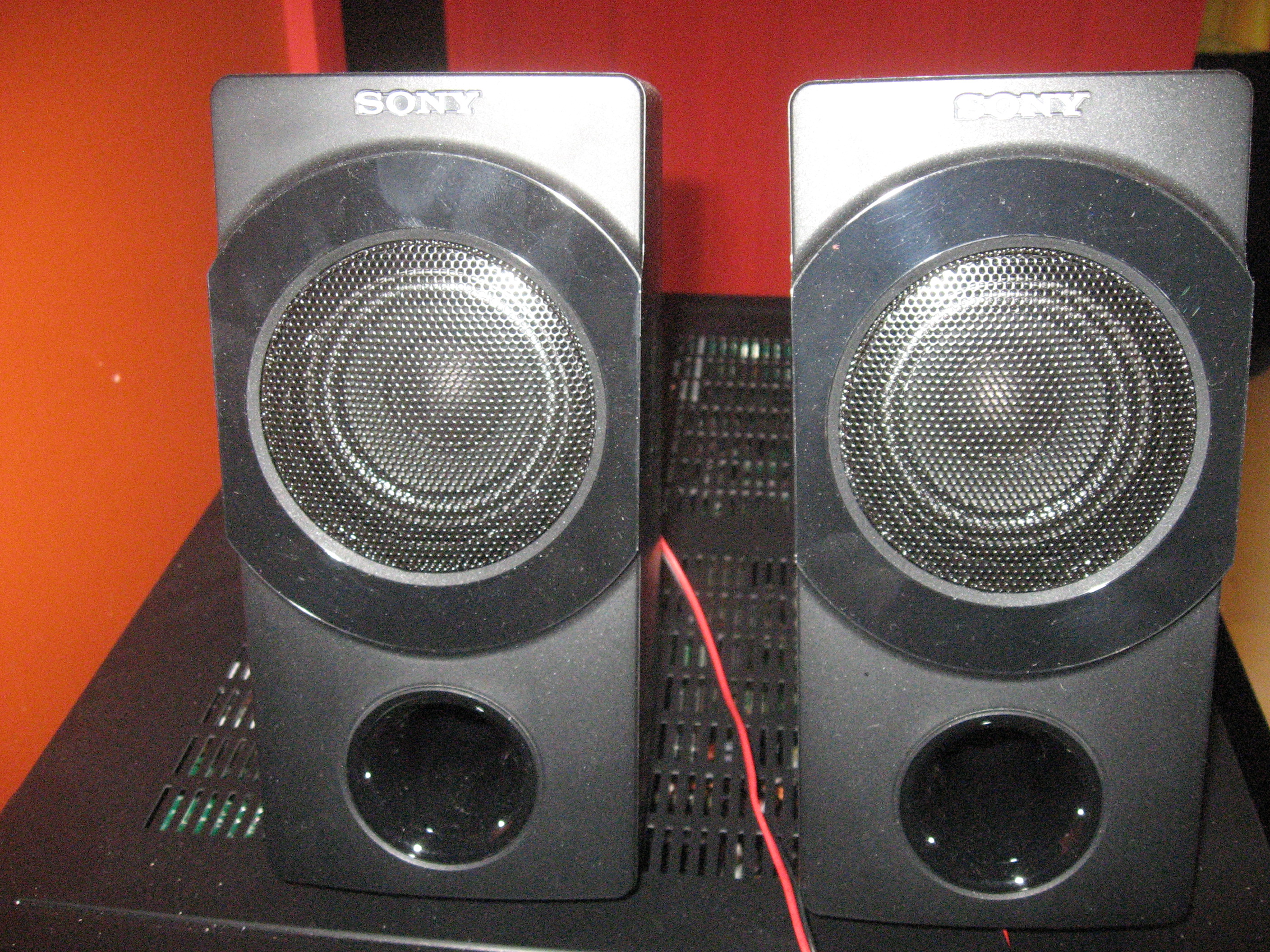
[1]I am reviewing the Sony SRS-DB500 2.1 active speaker system
which is the first multi-purpose high-quality active speaker
system that Ihave reviewd for thisblog.
This piece of hardware may not be to do with the home network
but Iam reviewing these speakers because they may end up
being used as PC speakers, speakers for use with personal-audio
equipment or simply as extension speakers for most of the
Internet radios that Ihave reviewed here. User groups like
churches may be interested in this speaker system as
aseparately-controlled “overflow speaker” for use with
theirpublic-address systems.
Description
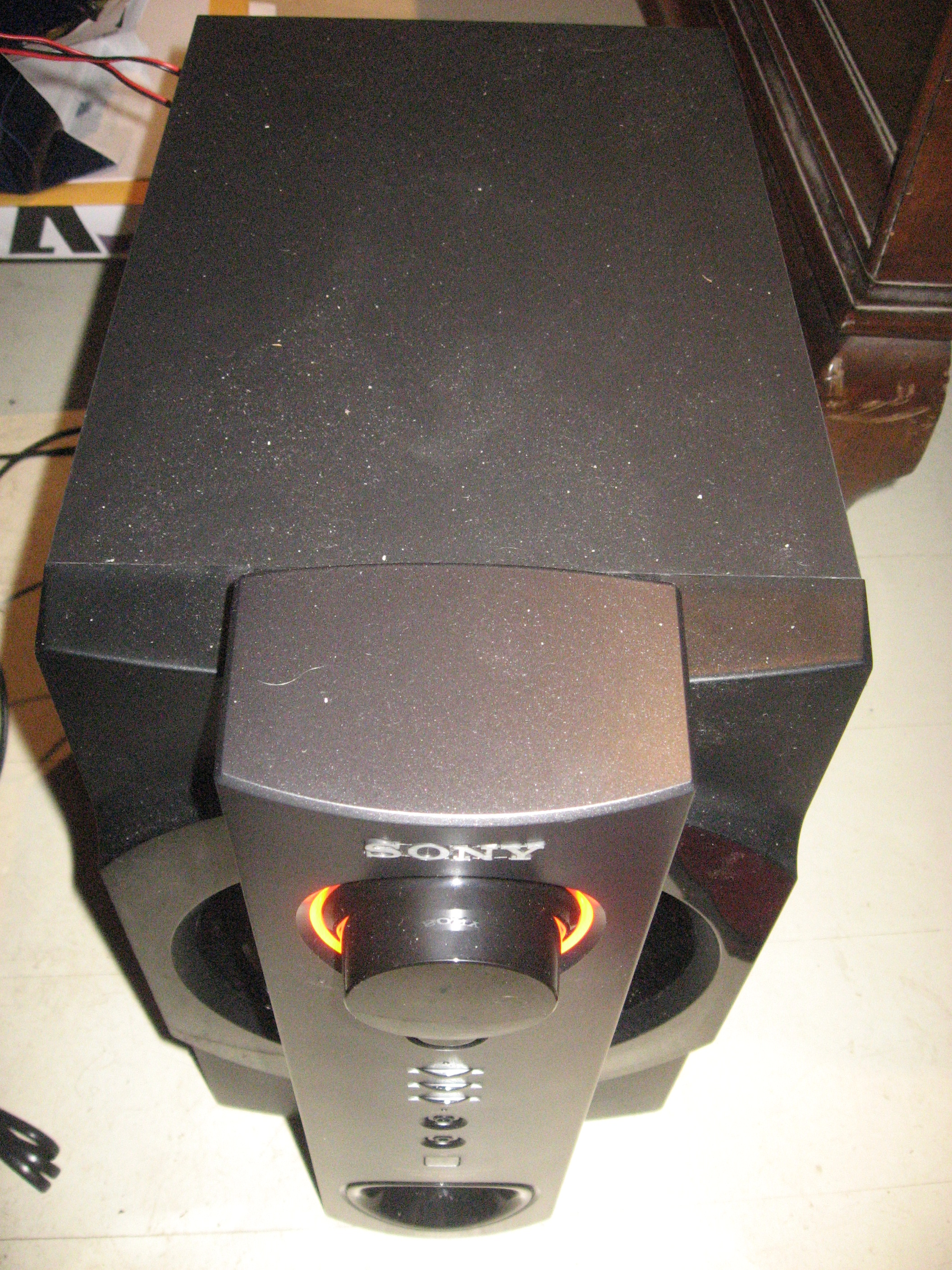
This set of active speakers is based on a2.1 speaker setup where
there are two speaker units capable of reproducing the midrange
and treble frequencies working alongside abass unit that
reproduces the bass frequencies. Here, the bass unit has all the
amplification for this system and provides 75W (4 ohms 10%
THD) per channel amplification for the speaker units and 150W
(2 ohms 10% THD) for the bass speaker.
There are two inputs for this unit – one pair of RCA jacks located
on the back and one 1÷8” jack on the front. This is so you can
connect two different signal sources like aPC and an iPod.
[2]
Fit and finish
The bass unit does feel very heave even though it uses Class-D
amplifiers, which usually indicates that the equipment is of very
good quality. This also influences the sound, especially with the
subwoofer because what you hear from this unit is just whatever
is in the recording.
When you operate the controls, there is afeeling of them being
smooth, which is another hallmark of good-quality equipment.
Controls
There is amain control knob that is arotary encoder with orange
“halo” ring. Here, the orange marker indicated current position
when it is adjusted or can be set to act as aVU meter or
decorative halo at othertimes.
This control and the controls on the remote offer local volume
and tone control, which is of use for line-level sources such as
aCD player, or the Zone 2or 3outputs on the STR-DA5500ES
receiver that Ihave reviewed. There isn’t asetting to set the
speaker to bypass or “home” these controls for use with
preamp-level outputs that have their own tone and volume
controls.
When you adjust the ton settings on the bass unit, you have to
press BASS or TREBLE then adjust the main knob. It is hard to
know which settings are “tone-flat” for proper assessment and
there aren’t any preset tone curves like “bass boost”, which may
disappoint younger people who want to instantly “pump up”
thebass.
11