
Operating instructions

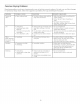

Common Drying Problems
Many drying problems involve poor cleaning results, poor soil and stain removal, residues of lint and scum, and fabric damage.
For satisfactory drying results, follow these suggestions provided by The Soap and Detergent Association.
PROBLEM
Greasy, oily
stains
POSSIBLECAUSES
o Fabricsoftener sheet.
SOLUTIONS
Rub fabric softener stains with bar
soap. Rinse and rewash.
PREVENTIVE MEASURES
Add a few bath towels to small loads for
proper tumbling.
Some "silk-like" fabrics should be air
dried.
Use proper drying temperature.
Placefabric softener sheet on top of load
before starting the dryer.
Reduce load size and rewash using _ Do not overload dryer.
liquid fabric softener in the final _ Use fabric softener in washer or dryer to
o
o
o
o
Lint _ Overloading.
Overdrying causes static
electricity.
Lint screen not clean when
cycle began.
Lint is attached to "pills."
Overdrying.
Temperature too high.
Overdrying.
Overloading.
Leaving items in dryer after
cycle ends.
Pilling
(Fibers break off,
ball up and cling
to fabric.)
Shrinking
Wrinkling
o
o
o
rinse.
Or, add a fabric softener sheet and
tumble without heat.
Use lint brush or roller to remove
lint.
Use a lint brush or shaver to re-
move pills, o
Irreversible condition.
Reduce load size and tumble at
medium or low heat for 5-10
minutes.
Remove items immediately. Hang
or fold.
reduce static electricity.
Remove items when they are slightly damp
to avoid overdrying.
Check that lint filter is clean and in place.
Use fabric softener to lubricate fibers.
When ironing, use spray starch or fabric
finish on collars and cuffs.
Turn items inside out to reduce abrasion.
Follow fabric care label directions.
If shrinking is a concern, check load often.
Remove items while slightly damp and
hang or lay flat to complete drying.
Block knits into shape.
Do not overload dryer.
Remove items as soon as cycle ends.
10