
Network Device Product Manual
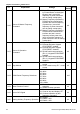
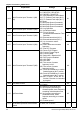
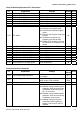



Table Of Contents
- Preface
- Table of Contents
- Chapter 1 Introduction
- Chapter 2 Installation and Wiring
- Chapter 3 Start Up
- Chapter 4 Digital Keypad Operation
- Chapter 5 Parameters
- 5.1 Summary of Parameter Settings
- Group 0 User Parameters
- Group 1 Basic Parameters
- Group 2 Operation Method Parameters
- Group 3 Output Function Parameters
- Group 4 Input Function Parameters
- Group 5 Multi-Step Speed and PLC Parameters
- Group 6 Protection Parameters
- Group 7 Motor Parameters
- Group 8 Special Parameters
- Group 9 Communication Parameters
- Group A PID Parameters
- 5.2 Parameter Settings for Applications
- 5.3 Description of Parameter Settings
- Group 0: User Parameters
- Group 1: Basic Parameters
- Group 2: Operation Method Parameters
- Group 3: Output Function Parameters
- Group 4: Input Function Parameters
- Group 5: Multi-step Speeds and PLC (Process Logic Control) Parameters
- Group 6: Protection Parameters
- Group 7: Motor Parameters
- Group 8: Special Parameters
- Group 9: Communication Parameters
- Group A: PID Control
- 5.1 Summary of Parameter Settings
- Chapter 6 Fault Code Information
- Chapter 7 Troubleshooting
- 7.1 Over Current (OC)
- 7.2 Ground Fault
- 7.3 Over Voltage (OV)
- 7.4 Low Voltage (Lv)
- 7.5 Over Heat (OH)
- 7.6 Overload
- 7.7 Keypad Display is Abnormal
- 7.8 Phase Loss (PHL)
- 7.9 Motor cannot Run
- 7.10 Motor Speed cannot be Changed
- 7.11 Motor Stalls during Acceleration
- 7.12 The Motor does not Run as Expected
- 7.13 Electromagnetic/Induction Noise
- 7.14 Environmental Condition
- 7.15 Affecting Other Machines
- Chapter 8 Maintenance and Inspections
- Appendix A Specifications
- Appendix B Accessories
- Appendix C How to Select the Right AC Motor Drive
Chapter 5 Parameters|VFD-S Series
5-8 Revision August 2008, SE09, SW V2.61
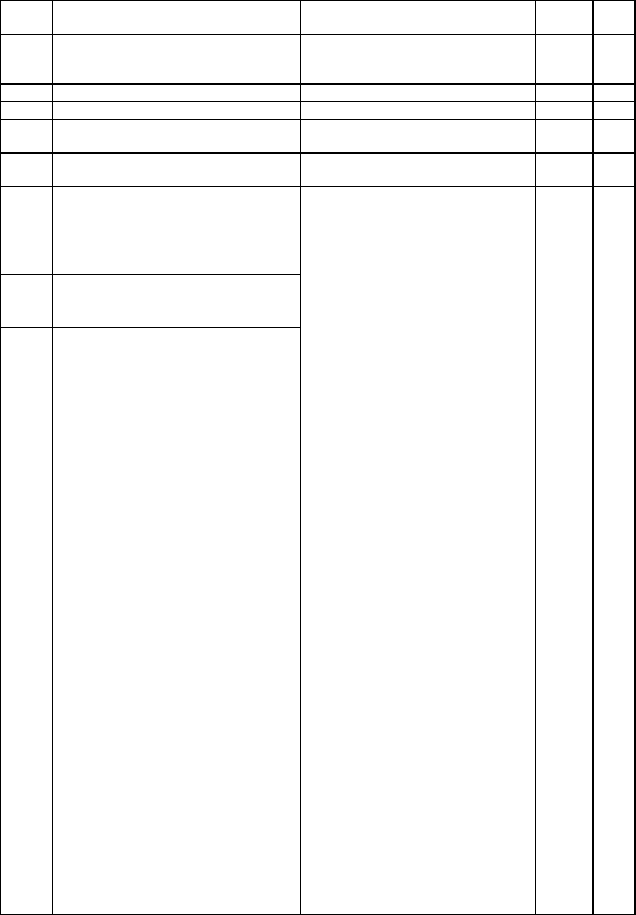
Pr. Explanation Settings
Factory
Setting
NOTE
d4: Enabled during running. After
the over-torque is detected, stop
running.
6-04 Over-Torque Detection Level d30 to d200% d150
6-05 Over-Torque Detection Time d0.1 to d10.0 Sec d0.1
6-06
Electronic Thermal Overload Relay
Selection
d0 to d2 d2
6-07
Electronic Thermal
Characteristic
d30 to d600 Sec d60
d0: No fault
d1: Over current (oc)
d2: Over voltage (ov)
d3: Over heat (oH)
6-08 Present Fault Record
d4: Over load (oL)
d5: Over load (oL1)
d6: External fault (EF)
6-09 Second Most Recent Fault Record
d7: Reserved
d8: Reserved
d9: Excess current during
acceleration (ocA)
d10: Excess current during
deceleration (ocd)
d11: Excess current during steady
state (ocn)
6-10 Third Most Recent Fault Record
d12: Ground fault (GF)
d0
d13: Reserved
d14: Low voltage (Lv)
d15: CPU failure 1 (cF1)
d16: CPU failure 2 (cF2)
d17: Base block (b.b.)
d18: Overload (oL2)
d19: Auto acceleration/deceleration
failure (cFA)
d20: Software protection enable
(codE)
d21: Reserved
d22: CPU failure (cF3.1)
d23: CPU failure (cF3.2)
d24: CPU failure (cF3.3)
d25: CPU failure (cF3.4)
d26: CPU failure (cF3.5)
d27: CPU failure (cF3.6)
d28: CPU failure (cF3.7)
d29: Hardware protection failure
(HPF.1)
d30: Hardware protection failure
(HPF.2)
d31: Hardware protection failure
(HPF.3)
d32: Communication time-out
(CE10)
d33: Reserved
d34: Software error (SErr)