
Installation manual








ESI Communications Servers Hardware Installation Manual Ordering and installing PRI circuits
J.1
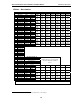
Ordering and installing PRI circuits
This section addresses considerations to make when ordering and installing ISDN PRI circuits on PRI-ready ESI
Communications Servers [except ESI-50L].
When ordering and provisioning such circuits, you must correctly define certain parameters in order for the PRI
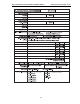
to function correctly. This section is a template for a PRI order form you can use to order PRI circuits that — if
provisioned according to the order form — will be fully compatible with PRI-ready ESI systems.
PRI configuration description
• Agent company — Name of the company that’s ordering the PRI on behalf of the customer.
• Contact — The individual who’s placing the PRI order.
• Address — Address of the agent company.
• Customer name — The name of the end user’s company.
• Circuit ID — The circuit number (or sequence of characters and numbers) that the service provider uses to
identify the PRI circuit. This is used to identify the PRI circuit when troubleshooting or reporting trouble.
• Support phone number — The service provider’s customer service phone number.
• PRI line protocol — The ISDN protocol offered by the service provider. ESI strongly recommends using the
NI-2 (National ISDN-2) protocol.
• Framing and line encoding — You must use ESF (extended super frame) framing and B8ZS (binary eight-
zero substitution) encoding.
• Pilot/DID numbers — When you order a PRI line, you can separate its 23 channels into one or more “hunt”
groups, each of which has its own main, or pilot, number. A PRI can also support DID (direct inward dialing)
numbers, which typically arew assigned to individual extensions or departments. For example, an ESI-100 can
support up to 10 pilot numbers and up to 300 DID numbers. When you program a pilot number in a PRI-
compatible ESI system (by using Installer Function 255), you must enter the maximum number of PRI channels
(one to 23) that can be used for the pilot number hunt group. For example:
Pilot number Name Chs. Day ring 1 Day ring 3 Day ring 5 Day ring 9
2145554378 ABC SYSTEMS 10 Dept. 290
2145552390 ABC SYS SVC 9 Dept. 291
2145555678 ABC SYS INTL 4 X100, X101 X100, X101 X102 Dept. 290
Total pilot number channels: 23
Important: The total number of PRI pilot number channels assigned cannot exceed 23; otherwise, intermittent
problems may result.
• Glare resolution — Must be normal (also called standard); i.e.,. cannot be yielding.
Glare is the condition wherein an outgoing call and an incoming call attempt to seize the same circuit at the
same time. On loop-start analog lines, this usually causes the two callers to be connected, because loop-start
lines do not manage glare resolution. However, PRi trunks utilize a standard glare resolution protocol, which
must be set up correctly on both the service provider’s switch and the ESI system. Part of glare resolution
defines what the CO would do with a call if glare is detected; and the ESi system will block an outgoing call if,
indeed, glare is detected. This frees up the channel so that the service provider’s incoming call rings through.
Because of this, the service provider’s switch must be programmed for normal glare resolution.
• Incoming hunt — Must be ascending.
Another portion of glare resolution requires specifying to the CO in which direction incoming calls should hunt.
To minimize glare, ESI systems perform either an ascending incoming hunt (from channel 1 to channel 23) or
a descending outgoing hunt (from channel 23 to channel 1). When ordering the PRI, you must make the
service provider aware of this requirement.
• ISDN bearer capabilities — This is the supported PRI feature set. Currently, ESI systems support only 56K
voice (CSV). This feature set also supports fax and modem transmissions.
(Continued)