
Computer Products of America Image Scanner Operator's Guide fi-4990C
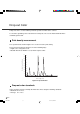
Table Of Contents
- Cover
- Inner Cover
- Revision Record
- Addresses
- IMPORTANT NOTE TO USERS
- Preface
- Conventions
- CONTENTS
- Chapter Index
- CHAPTER 1 COMPONENTS
- CHAPTER 2 INSTALLATION AND CONNECTIONS
- CHAPTER 3 OPERATING INSTRUCTION
- CHAPTER 4 DOCUMENT SPECIFICATION
- CHAPTER 5 SPECIFICATIONS
- CHAPTER 6 SETUP, BROWSE, AND TEST MODES
- Setup, Browse, and Test Modes
- Activating the Setup or Browse Mode
- Contents of the Setup or Browse Mode
- Transition of screens in setup mode
- Paper length check
- Doublefeed check
- Paper thickness setup
- Skew check
- IPC-3 mode
- Hopper height
- Paper separation level
- Drop-out color
- Background changeover
- Consumable counter
- Consumable counter reset
- Consumable alarm mode
- Buzzer
- Buzzer volume
- LCD contrast
- Picking speed
- TP_IF baud rate
- SCSI ID
- Product ID
- Pre-pick
- Pick start time
- Manual feed timeout
- Paper pick retry
- Paper feed retry
- Function key
- Setup mode lock
- Language
- White follower mode
- Interface board slot
- SCSI bus width setting
- Activating the Test Mode
- Contents of the Test Mode
- GLOSSARY OF TERMS
- INDEX
- Declaration of Conformity
- Back Cover
4-8
Drop-out Color
A drop-out color is a color visible by a human eye but not visible to the scanner.
To check the grounding color of document for a drop-out color, use the method and follow the
standards given below.
Print density measurement
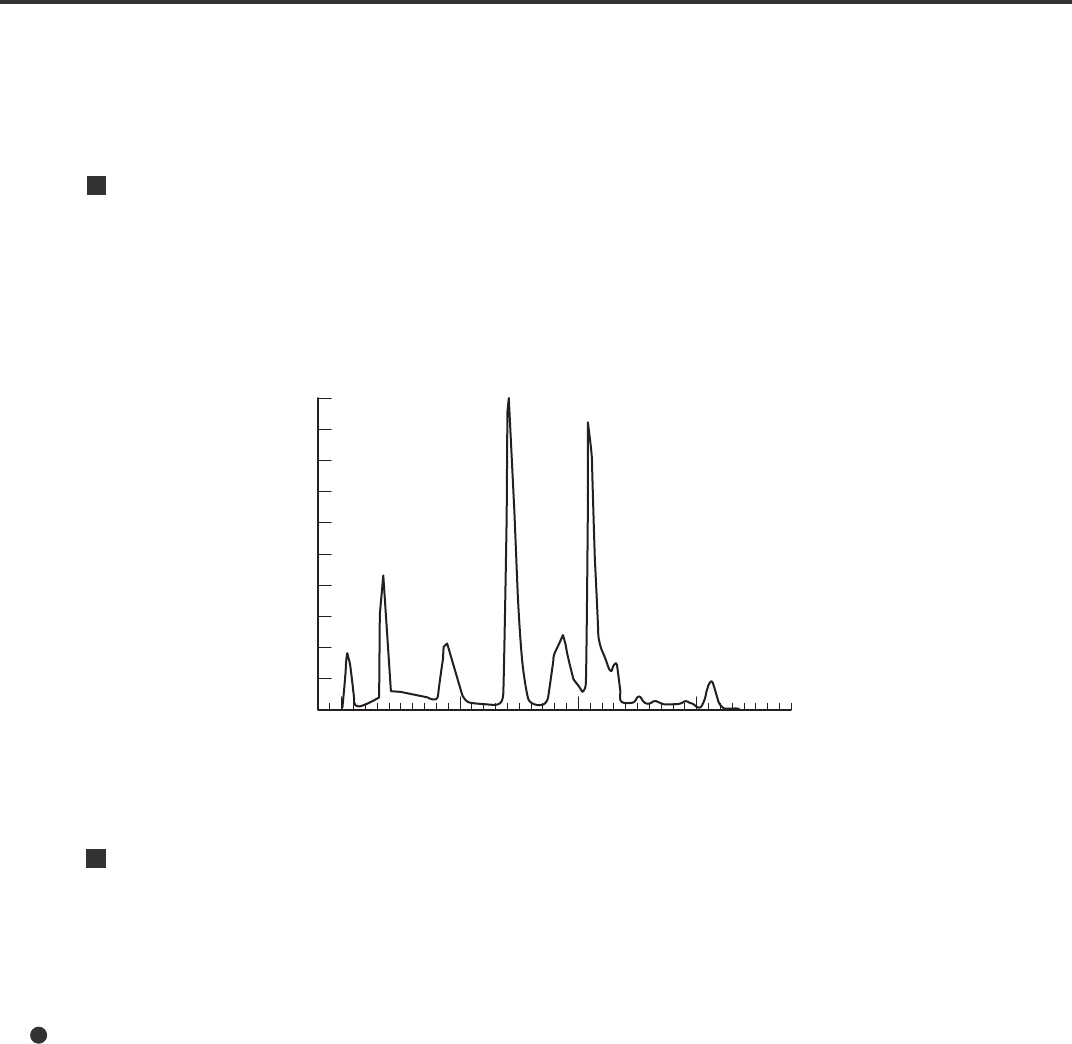
The spectrum chart shown in Figure 4.4 is used to measure print density.
The measurement must be made in one of the following ways:
• A light source using fluorescent.
• Macbeth PCS meter PCM II is used, which requires a filter.
Figure 4.4 Spectrum band
400
0
10
20
30
40
50
60
70
80
90
100
500 600 700
Waveength (nm)
Relative Spectral Power
Drop-out color standards
In the spectrum of fluorescent lamp the PCS value must satisfy the following standards:
• Maximum: 0.14 or less
• Average: 0.1 or less
09C4.P65 01.2.17, 5:44 PM8