
Intel Optane DC Persistent Memory - Configuration and Setup White Paper



2TECHNICAL WHITE PAPER
DCPMM has been under development for several years. HP and Intel
®
together with Microsoft have been working
on this new technology for HP Workstations since 2016. Like many new and disruptive computing technology
innovations in the past, DCPMM rst saw large scale deployment on servers in data center applications.
Widespread adoption will gradually migrate down into workstation computing platforms for very
high-performance applications.
Modes of Operation
DCPMM can be congured in two modes of operation, Memory and Persistent Memory. Persistent Memory usage
can be further broken down into Storage Mode and App Direct Mode.
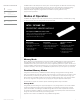
INTEL® OPTANE™ DC
PERSISTENT MEMORY MODULE
Intel® Optane™ DCPMM works in three modes:
• Memory mode (acts like standard DRAM and is volatile)
• Storage mode - storage over app direct
• App Direct Persistent Memory mode.
Memory Mode
• Fast Application Response
• Load entire complex models
into memory
• Lower cost high cap
memory congs
Storage Mode
• Applications are ready today
• Free up PCIe slots for graphics+
• High storage performance
for MMIO accesses
App Direct - Persistent
Memory
• App will need to be updated
to support this feature
• Instant recovery from loss
of power or app crashes
• Unlimited "undo" feature -
no need to save
Memory Mode
Memory Mode is the most straightforward use model for DCPMM. DCPMM modules are used as System Memory
alongside DRAM modules which are used as cache memory. As memory, DCPMM has similar performance
2
to 2666 MHz DDR4 memory but at a lower cost for memory congurations greater than or equal to 128 GB. In this
mode the DCPMM is volatile just like standard memory. If your workstation workows require memory congurations
of between 128 GB and 1 TB of memory, a DCPMM Memory Mode solution may be an option for you to consider.
Persistent Memory Modes
Congured as Persistent Memory, DCPMM has the distinct advantage of being persistent like storage devices
today. It can appear like any other disk or storage volume to the system. This means when your computer is turned
o either because you intentionally shut down for the day or you experienced an unplanned power outage, your
data will still be on the DCPMM modules just like it would for a traditional storage device. It can also be accessed
like memory if congured for that type of access, by mapping the storage into application address space.
Persistent Memory supports two modes of operation called Storage Mode and App Direct Mode.
Storage Mode
Storage Mode (also called Storage over App Direct) deployment is very straight forward. In this case the DCPMM
modules are congured as storage volumes and are available to your applications as storage using normal le
systems and interfaces. The advantage of DCPMM in Storage Mode is much faster read performance because
the modules are installed in a DIMM slot, so the data moves over the higher speed processor channels rather than
through the slower PCIe or SATA busses typical of storage devices.
Applications do not need to be modied when using DCPMM in Storage Mode.
1
Introduction
5
DCPMM Security
Overview
System Requirements
6
System Setup Overview
8
Appendices
CONTENTS & NAVIGATION