
Advanced Traffic Management Guide K/KA/KB.15.15
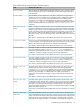
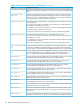
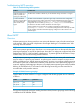

Table 9 MSTP debug command output: field descriptions
Displays the number of...Field
Received BPDUs that failed standard MSTP (802.1Q-REV/D5.0 14.4) validation checks
and were dropped. This counter is maintained by the CIST (default MST instance 0) on
a per-port basis.
Invalid BPDUs
Received BPDUs that were dropped on a port that is configured to not expect BPDU
packets. This counter is maintained by the CIST (MST instance, 0default MST instance 0
Errant BPDUs
in the network) on a per-port basis and is incremented each time a BPDU packet is
received on a port configured with the BPDU filter to ignore incoming BPDU packets
(spanning-tree bpdu-filter command) or the BPDU protection feature to disable
the port when BPDU packets are received (spanning-tree bpdu-protection
command).
BPDUs received from a neighbor bridge with inconsistent MST configuration information.
For example, BPDUs from a transmitting bridge may contain the same MST configuration
MST Config Error
BPDUs
identifiers (region name and revision number) and format selector as the receiving bridge,
but the value of the Configuration Digest field (VLAN ID assignments to regional IST and
MST instances) is different. This difference indicates a probable configuration error in
MST region settings on the communicating bridges. The received BPDU is still processed
by MSTP.
This counter is maintained by the CIST (default MST instance 0) on a per-port basis.
Times a port has received self-sent BPDU packets as the result of an external loop condition
in which the BPDUs were looped back to the originating transmission port. The received
BPDU is still processed by MSTP and the port changes to a blocked state.
Looped-back BPDUs
This counter is maintained by the CIST (default MST instance 0) on a per-port basis.
Times that no BPDUs are received within the scheduled interval (three times the Hello
Time value configured with the spanning-tree hello-time command) from a
Starved BPDUs
downstream CIST-designated peer port on the CIST root, alternate, or backup port. As
a result, the "starved" port triggers a spanning tree topology regeneration.
This counter is maintained by the CIST (default MST instance 0) on a per-port basis.
Times that no BPDUs are received within the scheduled interval (three times the Hello
Time value configured with the spanning-tree hello-time command) from a
Starved MSTI MSGs
downstream MSTI-designated peer port on the MSTI root, alternate, or backup port. As
a result, the "starved" port triggers a spanning tree topology regeneration.
This counter is maintained by the CIST (default MST instance 0) on a per-port basis.
Times that a BPDU packet is received from a bridge external to the MST region with a
Message Age value greater than the configured value of the Max Age parameter
Exceeded Max Age
BPDUs
(spanning-tree maximum age command). This may occur if the receiving bridge
is located too far from the root bridge (beyond the configured size of the spanning tree
domain on the root bridge) or if a BPDU packet with invalid root information is
continuously circulating between bridges in a spanning tree domain and needs to be
aged out.
This counter is maintained by the CIST (default MST instance 0) on a per-port basis.
Times that a BPDU packet is received from a bridge internal to the MST region with a
CIST Remaining Hops value less than or equal to 1. This may occur if the receiving bridge
Exceeded Max Hops
BPDUs
is located too far from the CIST regional root bridge (beyond the configured size of the
MST region on the CIST regional root bridge) or if a BPDU packet with invalid CIST
regional root bridge information is continuously circulating between bridges in the MST
Region and needs to be aged out.
This counter is maintained by the CIST (default MST instance 0 in the region) on a per-port
basis.
Times that an MSTI MSG packet is received from a bridge internal to the MST region
with an MSTI Remaining Hops value less than or equal to 1. This may occur if the receiving
Exceeded Max Hops
MSTI MSGs
bridge is located too far from the MSTI regional root bridge (beyond the configured size
of the MST region on the MSTI regional root bridge) or if a BPDU packet with invalid
MSTI regional root bridge information is continuously circulating between bridges in an
Troubleshooting an MSTP configuration 117