
Advanced Traffic Management Guide K/KA/KB.15.15
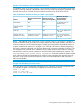
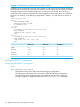
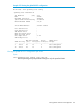
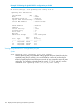
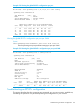
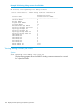


Example 125 Viewing debug counters for a specific port on a VLAN
Switch_A(config)#: show spanning-tree debug ports 9 vlan 20
Status and Counters - RPVST Debug Counters Information
VLAN ID : 20
Port : 9
Counter Name Value Last Updated
------------------------------ --------------- --------------------
Invalid BPDUs 0 04/16/2012 22:27:15
Errant BPDUs 0 04/16/2012 22:27:15
Looped-back BPDUs 0 04/16/2012 22:27:15
Starved BPDUs 5 05/01/2012 21:48:11
Exceeded Max Age BPDUs 0 04/16/2012 22:27:15
Topology Changes Detected 9 05/04/2012 21:54:05
Topology Changes Tx 5 05/05/2012 22:04:49
Topology Changes Rx 2 05/07/2012 18:08:34
Topology Change ACKs Tx 0 04/16/2012 22:27:15
Topology Change ACKs Rx 0 04/16/2012 22:27:15
TCN BPDUs Tx 0 04/16/2012 22:27:15
TCN BPDUs Rx 0 04/16/2012 22:27:15
CFG BPDUs Tx 0 04/16/2012 22:27:15
CFG BPDUs Rx 0 04/16/2012 22:27:15
RST BPDUs Tx 0 04/16/2012 22:27:15
RST BPDUs Rx 0 04/16/2012 22:27:15
RPVST BPDUs Tx 7812 05/05/2012 22:04:49
RPVST BPDUs Rx 1065 05/08/2012 19:43:11
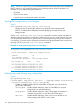
Field descriptions for RPVST+ debug command output
Shows the number of —Field
Received BPDUs that failed standard RPVST+ (802.1Q-REV/D5.0 14.4) validation checks and
were dropped. This counter is maintained on a per-port per-VLAN basis.
Invalid BPDUs
Received BPDUs that were dropped on a port that is configured to not expect BPDU packets. This
counter is maintained on a per-port basis and is incremented each time a BPDU is received on
Errant BPDUs
a port configured with the BPDU filter to ignore incoming BPDU packets (spanning-tree
bpdu-filter command) or the BPDU protection feature to disable the port when BPDU packets
are received (spanning-tree bpdu-protection command).
Times that a port has received self-sent BPDU packets as the result of an external loop condition
in which the BPDUs were looped back to the originating transmission port. The received BPDU
Looped-back
BPDUs
is still processed by RPVST+ and the port changes to a blocked state. This counter is maintained
on a per-port per-VLAN basis.
Times that no BPDUs are received within the scheduled interval (three times the Hello Time value
configured with the spanning-tree vlan hello-time command) from a VLAN-designated
Starved BPDUs
peer port on the VLAN root, alternate, or backup port. As a result, the “starved” port triggers a
spanning tree topology regeneration. This counter is maintained on a per-port per-VLAN basis.
Times that a BPDU packet is received from a bridge with a Message Age value greater than the
configured value of the Max Age parameter (spanning-tree maximum age command).
Exceeded Max
Age BPDUs
This may occur if the receiving bridge is located too far from the root bridge (beyond the
configured size of the spanning tree domain on the root bridge) or if a BPDU packet with invalid
root information is continuously circulating between bridges in a spanning tree domain and needs
to be aged out.
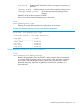
Times that a Topology Change event is detected by the port on a given VLAN and the port triggers
a topology change propagation throughout the network. A Topology Change event occurs when
a non-edge port enters forwarding state. This counter is maintained on a per-VLAN per-port basis.
Topology
Changes
Detected
160 Rapid per-VLAN spanning tree (RPVST+) operation