
Advanced Traffic Management Guide K/KA/KB.15.15
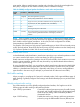

given packet. When a match between a packet and a classifier is found, the switch applies the
QoS policy configured for the classifier and the packet is handled accordingly.
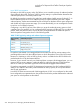
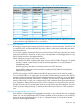
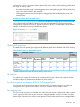
Table 16 Globally-configured packet classification: search order and precedence
Global QoS classifierPrecedenceSearch
order
UDP/TCP application type (port)1 (highest)1
Device priority (destination or source IP address)22
IP type of service: precedence and DSCP bit sets (IP packets only)33
IP protocol (IP, IPX, ARP, AppleTalk, SNA, and NetBeui)44
VLAN ID55
Incoming source-port on the switch66
The incoming 802.1p priority (present in tagged VLAN environments)
is preserved if no global QoS classifier with a higher precedence
matches.
7 (lowest)Default
NOTE: On the switches covered in this guide, if the switch is configured with multiple global
classifiers that match the same packet, the switch only applies the QoS marking configured for the
QoS classifier with the highest precedence. In this case, the QoS configuration for another,
lower-precedence classifier that matches is ignored.
For example, if QoS assigns a high priority to packets belonging to VLAN 100 and normal priority
to all IP protocol packets, because the IP protocol priority (4) has precedence over the VLAN priority
(5), IP protocol packets on VLAN 100 are set to normal priority.
Classifier-based match criteria
In classifier-based packet classification, match criteria provide a way to select the packets on which
you want to execute QoS actions, such as rate limiting or 802.1p prioritization.
Match criteria are configured by creating a class of IPv4 orIPv6 traffic, which contains one or more
match or ignore statements. A traffic class may be used by any classifier-based software feature,
such as QoS or port mirroring.
By using classifier-based QoS, you can configure multiple match criteria that search multiple fields
in packet headers to select the exact traffic you want to rate limit or prioritize for a port or VLAN
interface. A classifier-based QoS policy is especially useful when you want to manage different
types of traffic in the same way (for example, to prioritize both IP subnet and voice traffic).
QoS traffic marking
When you apply or reconfigure QoS actions for selected packets, QoS supports different types of
traffic marking in globally-configured QoS settings and classifier-based per-port or per-VLAN QoS
policies.
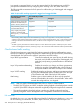
Globally-configured traffic marking
If a packet matches one of the globally-configured packet classifiers, QoS applies one of the
following types of traffic marking to the outbound packet:
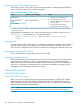
Layer 2 802.1p prioritization Controls the outbound port-queue priority for traffic leaving
the switch, and (if traffic exits through a VLAN-tagged port)
sends the priority setting with the individual packets to
downstream devices.
Layer 3 DSCP marking Enables the switch to set, change, and honor prioritization
policies by using the Differentiated Services (diff-serv) bits
About QoS 241