
Advanced Traffic Management Guide K/KA/KB.15.15

In a tagged or untagged VLAN, you can also ensure that IPv4/IPv6 packets carry an 802.1p
priority to downstream devices by configuring DSCP marking in the ToS/Traffic Class byte.
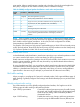
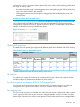
The following table summarizes the QoS options for traffic-marking in VLAN-tagged and untagged
environments.
Table 19 QoS traffic marking supported in tagged and untagged VLANs
Port membership in VLANsQoS marking supported on
outbound packets
UntaggedTagged
SupportedSupportedAssign an 802.1p priority that
determines the outbound port
queue to which a packet is sent
Not SupportedSupportedCarry the 802.1p priority to the
next downstream device
SupportedSupportedCarry a DSCP policy (DSCP
codepoint
1
and associated
802.1p priority
2
) to downstream
devices
1
DSCP marking (DSCP codepoint and associated 802.1p priority) are not supported on non-IP packets and packets
selected using the following global QOS classifiers: Layer 3 Protocol and IP-Precedence. Also, in order for DSCP policy
marking to be honored on a downstream device, the device must be configured to use the DSCP policy in IP packet
headers.
2
The 802.1p priority associated with a DSCP codepoint is used to determine the packet's outbound port queue. When
used in a VLAN-tagged environment, an 802.1p priority is also carried in the 802.1Q field of outbound packet headers.
Classifier-based traffic marking
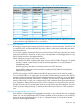
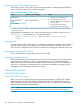
Classifier-based per-port or per-VLAN QoS policies support the following traffic-marking actions.
Note that in addition to globally-configured QoS traffic marking (802.1p and DSCP prioritization),
classifier-based QoS policies also support IP precedence and rate limiting.
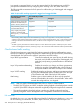
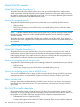
Layer 2802.1p prioritization Controls the outbound port queue priority for traffic leaving
the switch, and (if traffic exits through a VLAN-tagged port)
sends the priority setting in packet headers to downstream
devices.
Layer 3 IP precedence-bitmarking Enables the switch to set, change, and honor prioritization
policies by using the IP precedence bits in the ToS byte of
IPv4 packet headers and Traffic Class byte of IPv6 headers.
Layer 3 DSCP marking Enables the switch to set, change, and honor prioritization policies
by using the Differentiated Services (Diffserv) bits in the ToS byte
of IPv4 headers and Traffic Class byte of IPv6 headers.
Rate limiting Enables a port or VLAN interface to allow only the specified
amount of bandwidth to be used for inbound traffic. When traffic
exceeds the configured limit, it is dropped.
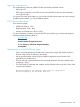
NOTE: After you apply a classifier-based QoS policy on a port or VLAN interface:
• The 802.1p (CoS) priority and DSCP codepoint marking applied to classified packets override
any 802.1p and DSCP codepoint values that are globally-configured using the QoS commands.
• The rate limit applied to classified packets overrides any globally configured rate limit
globally-configured. See the Management and Configuration Guide for more information.
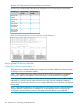
No override
By default, the show qos output for following global QoS classifiers may display No-override
for QoS marking: IP Precedence, IP Diffserv, Layer-3 Protocol, VLAN ID, and Source-port. The
244 Quality of Service: Managing bandwidth effectively