
Advanced Traffic Management Guide K/KA/KB.15.15
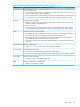
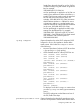

• host-tos-redirectredirect
• host-tos-unreachablerouter-advertisement
• host-unknownrouter-solicitation
• host-unreachablesource-quench
• information-replysource-route-failed
• information-requesttime-exceeded
• mask-replytimestamp-reply
• mask-requesttimestamp-request
• mobile-redirecttraceroute
• net-redirectttl-exceeded
• net-tos-redirectunreachable
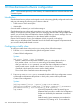
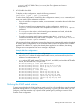
icmpv6-type-name You can also enter any of the following ICMPv6
packet-type names to configure more precise match
criteria for ICMP packets in an IPv6 class configuration.
To display a list of valid icmpv6-type-name entries
when you enter icmp as the IP protocol type in a
match/ignore statement, enter ?. Some of the valid values
are as follows:
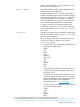
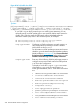
• cert-path-advertisemobile-advertise
• cert-path-solicitmobile-solicit
• destination-unreachablend-na
• echo-replynd-ns
• echo-requestnode-info
• home-agent-replynode-query
• home-agent-requestpacket-too-big
• inv-nd-naparameter-problem
• inv-nd-nsredirect
• mcast-router-advertiserouter-advertisement
• mcast-router-solicitrouter-renum
• mcast-router-terminate
router-solicitation
• mld-done time-exceeded
• mld-query ver2-mld-report
• mld-report
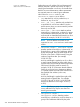
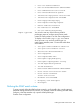
Defining the IGMP match criteria
To more precisely define the IGMP packets to match in an IPv4 traffic class, use the optional
parameter settings described in this section. For example, instead of matching all IGMP traffic,
configure a class that matches only a specific IGMP packet type.
Context: Class configuration
Defining the IGMP match criteria 349