
Advanced Traffic Management Guide K/KA/KB.15.15

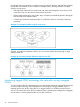
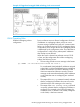


Example 36 A switch with multiple VLANs configured and internal routing disabled
Protocol VLAN environment
Example 36 (page 45) illustrates a protocol VLAN environment also. In this case, VLANs W and
X represent routable protocol VLANs. VLANs Y and Z can be any protocol VLAN.
As noted for the discussion of multiple port-based VLANs, VLAN 1 is not shown. Enabling internal
(IP) routing on the switch allows IP traffic to move between VLANs on the switch, but routable,
non-IP traffic always requires an external router.
Routing options for VLANs
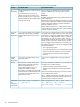
Table 3 Options for routing between VLAN types in the switch
NETbeui
1
SNA
1
AppleTalkARPIPv6IPv4IPXPort-Based
—————Yes—YesPort-Based
——————Yes
2
—IPXProtocol
—————Yes—YesIPX4
————Yes
2
———IPV6
———Yes
2
————ARP
——Yes
2
—————AppleTalk
————————SNA
————————NETbeui
1
Not a routable protocol type. End stations intended to receive traffic in these protocols must be attached to the same
physical network.
2
Requires an external router to route between VLANs.
Overlapping (Tagged) VLANs
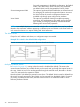
A port can be a member of more than one VLAN of the same type if the device to which the port
connects complies with the 802.1Q VLAN standard.
About static VLAN operation 45