
Advanced Traffic Management Guide K/KA/KB.15.15

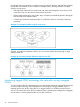


For example, a port connected to a central server using a network interface card (NIC) that complies
with the 802.1Q standard can be a member of multiple VLANs, allowing members of multiple
VLANs to use the server.
• Although these VLANs cannot communicate with each other through the server, they can all
access the server over the same connection from the switch.
• Where VLANs overlap in this way, VLAN "tags" are used in the individual packets to distinguish
between traffic from different VLANs.
• A VLAN tag includes the particular VLAN I.D. (VID) of the VLAN on which the packet was
generated.
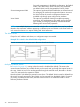
Example 37 Overlapping VLANs using the same server
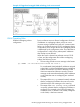
Similarly, using 802.1Q-compliant switches, you can connect multiple VLANs through a single
switch-to-switch link.
Example 38 Connecting multiple VLANs through the same link
Introducing tagged VLAN technology into networks running untagged
VLANs
You can introduce 802.1Q-compliant devices into networks that have built untagged VLANs based
on earlier VLAN technology. The fundamental rule is that legacy/untagged VLANs require a
separate link for each VLAN, while 802.1Q, or tagged VLANs can combine several VLANs in
one link. This means that on the 802.1Q-compliant device, separate ports (configured as untagged)
must be used to connect separate VLANs to non-802.1Q devices.
46 Static Virtual LANs