
Advanced Traffic Management Guide K/KA/KB.15.15
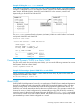
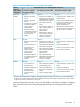
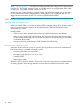
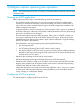
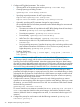

NOTE: In Table 8 (page 75), the Unknown VLAN parameters are configured on a per-port basis
using the CLI. The Tagged, Untagged, Auto, and Forbid options are configured per static VLAN
on every port, using either the menu interface or the CLI.
Because dynamic VLANs operate as Tagged VLANs, and because a tagged port on one device
cannot communicate with an untagged port on another device, HP recommends that you use
Tagged VLANs for the static VLANs you will use to generate advertisements.
GVRP and VLAN access control
Advertisements and dynamic joins
When you enable GVRP on a switch, the default GVRP parameter settings allow all of the switch's
ports to transmit and receive dynamic VLAN advertisements (GVRP advertisements) and to
dynamically join VLANs.
Enabling GVRP:
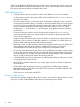
• Allows a port to both advertise and join dynamic VLANs (Learn mode—the default).
• Allows a port to send VLAN advertisements, but not receive them from other devices; that is,
the port cannot dynamically join a VLAN but other devices can dynamically join the VLANs
it advertises (Block mode).
• Prevents a port from participating in GVRP operation (Disable mode).
Port-Leave from a dynamic VLAN
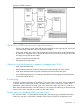
A dynamic VLAN continues to exist on a port for as long as the port receives its advertisements
from another device connected to that port, or until:
• Converting the VLAN to a static VLAN
• Reconfiguring the port to block or disable
• Disabling GVRP
• Rebooting the switch.
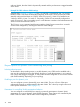
The time-to-live for dynamic VLANs is 10 seconds, if a port has not received an advertisement for
an existing dynamic VLAN during that time, the port removes itself from that dynamic VLAN.
76 GVRP