
HP Power over Ethernet (PoE/PoE+) Planning and Implementation Guide


2-3
Operating Rules
PoE Power Characteristics
Threshold
You can configure one of the following thresholds:
■ A global power threshold that applies to all modules on the switch.
This setting acts as a trigger for sending a notice when the PoE power
consumption on any PoE module installed in the switch crosses the
configured global threshold level. (Crossing the threshold level in
either direction—PoE power usage either increasing or decreasing—
triggers the notice.) The default setting is 80%.
■ A per-slot power threshold that applies to an individual PoE module
installed in the designated slot. This setting acts as a trigger for
sending a notice when the module in the specified slot exceeds or
goes below a specific level of PoE power consumption.
For example if the threshold is set at 50%, the switch informs you that the
switch has exceeded the threshold when 51% of available PoE power is being
used.
For more information, see the Management and Configuration Guide for
your switch at:
www.hp.com/networking/support
PoE Power Characteristics
Line Loss
A certain amount of power is consumed by the resistance of the wire in the
LAN cable connected from the switch to the powered device (typically less
than 16% loss), which can be influenced by cable length, quality, and other
factors. The IEEE 802.3af specification has addressed loss of power by
providing more power than a powered device requires. As well, depending
upon the classification (Class 0-4) of the device, the switch will provide more
or less power to address the specific power needs of that end device.
PD Power Classification
A PD is classified based on the maximum power it draws across all input
voltages and operational modes. The most common class is 0, in which the
switch will allow a maximum draw of 15.4 watts per port. As an example, 15.4
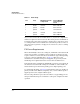
watts - Power Loss (16%) = 12.95 watts. See Table 2-1.