
IPv6 Configuration Guide K/KA/KB.15.15
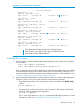

Loopback route
A static IPv6 route automatically created in the routing table for use if other routes to a
destination are not available. The gateway is a loopback interface (lo0) and the destination
is ::1/128.
Statically configured routes
On a given routing switch, one static route can be configured directly into the routing table
for each destination. In the default configuration, administrative distance and route metric are
both "1". See “About static routing ” (page 182).
OSPFv3
If OSPFv3 is enabled, the routing switch learns of routes from the advertisements other OSPFv3
routers transmit. If the OSPFv3 route has a lower administrative distance than any other routes
from different sources to the same destination, the routing switch places the route in the IPv6
route table. See “Metric and administrative distance” (page 178).
Routing table content
A routing protocol such as OSPFv3 develops its own database of routes. When the protocol has
more than one route to a destination, it selects the route with the lowest administrative distance
and inserts this route into the routing table. For each such route, the routing table maintains the
following data:
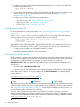
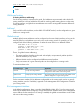
UseParameter
Composed of the contiguous, high-order bits in a packet's destination network prefix that
must match the destination network prefix in the routing table entry. For example:
Address: 2001:db8:1ad:0:218:71ff:fedd:cf00/64
Prefix: 2001:db8:1ad:0/64
Destination
(IPv6 network prefix)
Address: 2626:17b:1:1: 218:71ff:fedd:cf00/48
Prefix: 2626:17b:1/48
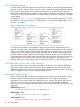
The next-hop router in the path to the destination. It can be either the IPv6 address of the
next directly connected router or the IP routing interface to use for forwarding the routed
Gateway
traffic toward its destination. If an IPv6 address is used, it can be either the link-local or
global unicast address of the interface on the next-hop router.
Connected:
A destination configured on the routing switch itself and can be a loopback interface,
a global unicast address, or a link-local address.
Type (route type)
Static:
A manually configured route to a destination on another router.
OSPF3:
A route discovered by the OSPFv3 protocol running on the routing switch.
Applies to OSPFv3 routes only.Sub-type
Used to compare routes to the same destination, learned by different routing methods, to
select the best route. The distance for connected routes is always 0. The default distance for
Distance
(Administrative Distance)
static and dynamic routes is configurable; Default: 1. See also “Concurrent static and dynamic
routing operation” (page 174).
Calculated by the routing switch and used to compare different routes, learned by the same
routing method, to select the best overall route.
Metric
Destination network
Destination network prefixes identify the networks known to a routing switch. When the routing
switch receives a packet for routing, it matches the packet's destination address to a network prefix
in the routing table and forwards the packet to the indicated gateway for that network. The prefix
Different route types in the IPv6 routing table 177