
IPv6 Configuration Guide K/KA/KB.15.15

Adjusting the retransmit interval on a virtual link
For more information, see “About adjusting virtual link performance by changing the interface
settings” (page 261).
Syntax:
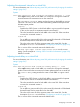
area area-id virtual link router-id retransmit-interval 1 - 3600
In the ospf3 context, used on both ABRs in a virtual link to change the number of
seconds between LSA retransmissions on the virtual link.
The retransmit-interval setting must be the same on both ABRs on a given
virtual link. This value is also used when retransmitting database description and
link-state request packets.
area-id
Specifies the OSPFv3 area in which both ABRs in a given virtual link operate.
In this use, the area ID is sometimes termed "transit area ID."
This value must be the same for both ABRs in the virtual link. If the area does
not exist, this command creates it.
router-id
For an ABR in a given virtual link, this is the router ID (in decimal or 32-bit dotted
decimal format) used to create the link on that ABR.
This value is the router ID of the opposite router in the virtual link. See the
description of router-id in the section “Configuring a virtual link” (page 222).
The no version of the command restores the default value.
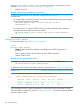
Use show ipv6 ospf3 virtual-link router-id to view the current
setting. See the example at “Viewing OSPFv3 virtual link information” (page 243).
Default: 5 seconds
Adjusting transit-delay on a virtual link
For more information, see “About adjusting virtual link performance by changing the interface
settings” (page 261).
Syntax:
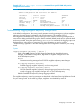
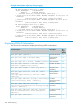
area area-id virtual-link router-id transit-delay 0 - 3600
In the ospf3 context, used on both ABRs in a virtual link to change the estimated
number of seconds it takes to transmit a link state update packet over a virtual link.
The transit-delay setting must be the same on both ABRs on a given virtual
link.
area-id
Specifies the OSPFv3 area in which both ABRs in a given virtual link operate.
In this use, the area ID is sometimes termed "transit area ID."
This value must be the same for both ABRs in the virtual link. If the area does
not exist, this command creates it.
router-id
For an ABR in a given virtual link, this is the router ID (in decimal or 32-bit dotted
decimal format) used to create the link on that ABR.
This value is the router ID of the opposite router in the virtual link. See the
description of router-id in the section “Configuring a virtual link” (page 222).
The no version of the command restores the default value.
Configuring a virtual link 225