
IPv6 Configuration Guide K/KA/KB.15.15
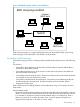


Figure 2 With MLD snooping, traffic is sent to MLD hosts
Switch
Source
Listener
(MLD host)
Listener
(MLD host)
MLD snooping enabled
MLD snooping operates on a single VLAN (though there can be multiple VLANs, each running
MLD snooping). Cross-VLAN traffic is handled by a multicast router.
Forwarding in MLD snooping
When MLD snooping is active, a multicast packet is handled by the switch as shown in the following
list.
The packet is:
• Forwarded to ports that have nodes that have joined the packet's multicast address (that is,
MLD hosts on that address packet)
• Forwarded toward the querier—If the switch is not the querier, the packet is forwarded out
the port that leads to the querier.
• Forwarded toward any multicast routers—If there are multicast routers on the VLAN, the packet
is forwarded out any port that leads to a router.
• Forwarded out administratively forwarded ports—The packet is forwarded through all ports
set administratively to forward mode. (See the description of forward modes, below.)
• Dropped for all other ports.
Each individual port's forwarding behavior can be explicitly set using a CLI command to one of
these modes:
Auto (the default mode)
The switch forwards packets through this port based on the MLD rules and the packet's multicast
address. In most cases, this means that the switch forwards the packet only if the port connects
to a node that is joined to the packet's multicast address (that is, to an MLD host). There is
seldom any reason to use a mode other than "auto" in normal operation (though some
diagnostics may make use of "forward" or "block" mode).
MLD snooping 81