
Multicast and Routing Guide K/KA/KB.15.15
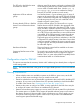
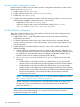
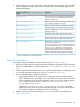
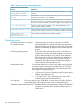
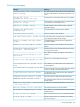
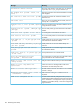
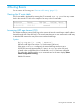
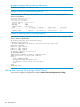
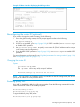
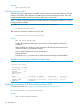

Table 7 Options Accessed in Router PIM Context
Operation
Options Accessed in Router PIM
Context
Enter an address and mask to define an additional multicast group or a range
of groups.
rp-candidate group-prefix
group-addr/group-mask
Tells the BSR how long it should expect the sending C-RP router to be operative.
(Default: 150; 0 if router is not a candidate.)
rp-candidate hold-time
30-255
Changes the priority for the C-RP router. When multiple C-RPs are configured
for the same multicast group(s), the priority determines which router becomes
the RP for such groups. A smaller value means a higher priority. (Default: 192)
rp-candidate priority 0-255
Disable or enable the router’s ability to switch multicast traffic flows to the
shortest path tree. (Default: enabled)
[ no ] spt-threshold
Option: Globally change the interval for the frequency at which join and prune
messages are forwarded on the router’s VLAN interfaces. (Default: 60 seconds)
join-prune-interval 5-65535
Option: Enable or disable PIM traps. (Default: disabled)trap neighbor-loss |
hardware-mrt-full |
software-mrt-full | all
Operating notes
Eliminating redundancy in support
for a multicast group
Configuring only one router in a domain as an RP for
supporting traffic for a specific multicast group eliminates
support redundancy for that group. In this case, if that router
becomes unavailable, the group will be excluded from the
domain.
Excluding multicast groups If all of the C-RPs and static RPs (if any) in a domain are
configured to exclude some multicast groups or ranges of
groups, multicast traffic for such groups will be dropped
when received by a DR, and will not be forwarded to any
RP. (Such groups will still be switched locally if IGMP is
enabled on the VLAN where the excluded group traffic is
received from a multicast traffic source.)
Routing table entries For multicast traffic from a source to the edge router supporting
a multicast receiver requesting the traffic, when an SPT forms,
the routing table (on the edge router) will contain both of the
following for the supported group:
• (S,G) entry for the source IP address and IP multicast group
address supported by the SPT.
• (*,G) entry for the "any" (wildcard) source and (same)
multicast group supported by the RP tree.
Flow capacity The router supports up to 2048 flows. A router acting as a DR or RP has a
significantly higher CPU load than other routers in a PIM-SM domain.
IP addresses acquired through DHCP PIM-SM operation requires statically configured IP addresses
and does not operate with IP addresses acquired from a
DHCP server.
104 PIM-SM (Sparse Mode)