
Multicast and Routing Guide K/KA/KB.15.15

7 Open Shortest Path First Protocol (OSPF)
OSPFv2 is the IPv4 implementation of the Open Shortest Path First protocol. (OSPFv3 is the IPv6
implementation of this protocol.) Beginning with software version K.15.01, the switches can be
configured to run OSPFv2 either alone or simultaneously with OSPFv3. (OSPFv2 and OSPFv3 run
as independent protocols on the switch and do not have any interaction when run simultaneously.)
For overview information on OSPF, see “Overview of OSPF” (page 189).
Configuring OSPF on the routing switch
Enabling IP routing
Syntax:
[no] ip routing
Executed at the global configuration level to enable IP routing on the routing switch.
Default: Disabled
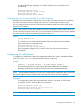
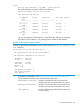
The no form of the command disables IP routing. (Global OSPF and RIP routing
must be disabled before you disable IP routing.)
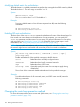
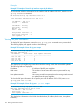
Example:
HP Switch(config)# ip routing
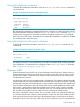
Enabling global OSPF routing
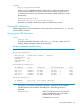
Syntax:
[no] router ospf [ enable | disable ]
Executed at the global configuration level to enable OSPF on the routing switch
and to enter the OSPF router context. This enables you to proceed with assigning
OSPF areas, including area border router (ABR) and autonomous system boundary
router (ASBR) configuration, and to modify OSPF global parameter settings as
needed.
The enable form of the command enables OSPF routing, and the disable form
of the command disables OSPF routing.
Global IP routing must be enabled before executing this command.
Default: Disabled
The no form of the command deletes all protocol specific information from the global
context and interface context. All protocol parameters are set to default values.
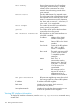
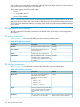
NOTE: If you disable OSPF, the switch retains all the configuration information
for the disabled protocol in flash memory. If you subsequently restart OSPF, the
existing configuration will be applied. After restarting OSPF, the exiting configuration
will be applied and the protocol will be in the disabled state.
140 Open Shortest Path First Protocol (OSPF)