
Multicast and Routing Guide K/KA/KB.15.15
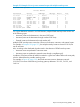

Example 123 Example of show ip route command output with multiple next-hop routes
HP Switch show ip route
IP Route Entries
Destination Gateway VLAN Type Sub-Type Metric Dist.
------------------ --------------- ---- --------- ---------- ---------- -----
1.0.0.0/8 10.0.8.1 1 static 1 1
10.0.8.0/21 DEFAULT_VLAN 1 connected 1 0
12.0.9.0/24 VLAN3 3 connected 1 0
15.0.0.0/8 10.0.8.1 1 static 1 1
21.0.9.0/24 162.130.101.2 2 ospf IntraArea 2 110
21.0.9.0/24 162.130.101.3 2 ospf IntraArea 2 110
21.0.9.0/24 162.130.101.4 2 ospf IntraArea 2 110
127.0.0.0/8 reject static 0 0
127.0.0.1/32 lo0 connected 1 0
162.130.101.0/24 VLAN2 2 connected 1 0
For a given destination network in an OSPF domain, multiple ECMP next-hop routes can be one
of the following types.
• Intra-area (routes to the destination in the same OSPF area)
• Inter-area (routes to the destination through another OSPF area)
• External (routes to the destination through another AS)
Multiple ECMP next-hop routes cannot be a mixture of intra-area, inter-area, and external routes.
For example, in Example 123 (page 197), the multiple next-hop routes to network 21.0.9.0/24
are all intra-area.
Also, according to the distributed algorithm used in the selection of ECMP next-hop routes:
• Intra-area routes are preferred to inter-area routes.
• Inter-area routes are preferred to external routes through a neighboring AS.
In addition, ECMP ensures that all traffic forwarded to a given host address follows the same path,
which is selected from the possible next-hop routes.
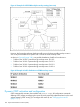
For example, in Figure 41 (page 198), the ECMP inter-area routes to destination network
10.10.10.0/24 consist of the following next-hop gateway addresses: 12.0.9.2, 13.0.9.3, and
14.0.9.4.
Equal cost multi-path routing (ECMP) 197