
Multicast and Routing Guide K/KA/KB.15.15
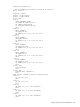
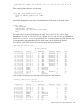
10.3.33.0/24 VLAN33 33 connected 1 0
10.3.34.0/24 VLAN34 34 connected 1 0
10.3.37.0/24 10.3.33.2 33 ospf IntraArea 2 110
127.0.0.0/8 reject static 0 0
127.0.0.1/32 lo0 connected 1 0
But this route table does not include all the possible routes in all domains: routes to subnets
10.1.15.x, 10.1.16.x, 10.2.21.x, and 10.2.29.x (VLANs 15, 16, 21, and 29) are missing. Host
computer M cannot ping host X because there is no route to it, though it can ping through the
"invisible" South router to host Y or host Z.
The problem is that those missing subnets are directly connected to the North and South border
routers, and directly connected routes must be explicitly redistributed with a redistribute
connected command even though they are RIP routes and RIP routes were redistributed. So by
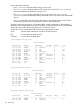
adding redistribute connected commands to the router ospf contexts of the North and
South routers, like this:
.
.
router ospf
area backbone
redistribute connected
redistribute rip
exit
.
.
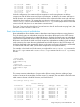
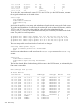
All existing routes are redistributed and the route table for the East router is now complete:
East(config)# show ip route
IP Route Entries
Destination Gateway VLAN Type Sub-Type Metric Dist.
--------------- --------------- ---- --------- ---------- ---------- -----
10.1.11.0/24 10.3.32.1 32 ospf External2 10 110
10.1.12.0/24 10.3.32.1 32 ospf External2 10 110
10.1.13.0/24 10.3.32.1 32 ospf External2 10 110
10.1.14.0/24 10.3.32.1 32 ospf External2 10 110
10.1.15.0/24 10.3.32.1 32 ospf External2 10 110
10.1.16.0/24 10.3.32.1 32 ospf External2 10 110
10.2.21.0/24 10.3.33.2 33 ospf External2 10 110
10.2.22.0/24 10.3.33.2 33 ospf External2 10 110
10.2.23.0/24 10.3.33.2 33 ospf External2 10 110
10.2.29.0/24 10.3.33.2 33 ospf External2 10 110
10.3.31.0/24 10.3.32.1 32 ospf IntraArea 2 110
10.3.31.0/24 10.3.33.2 33 ospf IntraArea 2 110
10.3.32.0/24 VLAN32 32 connected 1 0
10.3.33.0/24 VLAN33 33 connected 1 0
10.3.34.0/24 VLAN34 34 connected 1 0
10.3.37.0/24 10.3.33.2 33 ospf IntraArea 2 110
127.0.0.0/8 reject static 0 0
127.0.0.1/32 lo0 connected 1 0
Host L can now ping host X and, indeed, any other host in any of the three routing domains.
Finer control of inter-domain routing using route policy
The wide variety of match types available with route policy allows you to make finer distinctions
when distributing routes across routing domain boundaries.
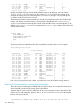
Suppose that you want to limit the distribution of the "non-connected" routes in the northern RIP
domain to the "odd-numbered" prefixes—that is, to 10.1.11.x and 10.1.13.x. You can accomplish
that by creating a prefix list:
ip prefix-list "Odds" seq 5 permit 10.1.11.1 255.255.255.0 ge 24 le 24
218 Route Policy