
Multicast and Routing Guide K/KA/KB.15.15
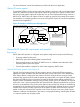
• Because routing is not allowed between the management VLAN and other VLANs, a DHCP
server must be available in the management VLAN if clients in the management VLAN require
a DHCP server.
• If the management VLAN IP address configuration changes after mgmt-vlan has been
configured as the remote ID suboption, the routing switch dynamically adjusts to the new IP
addressing for all future DHCP requests.
• The management VLAN and all other VLANs on the routing switch use the same MAC address.
Overview of DHCP
The DHCP client sends broadcast request packets to the network; the DHCP servers respond with
broadcast packets that offer IP parameters, such as an IP address for the client. After the client
chooses the IP parameters, communication between the client and server is by unicast packets.
HP routing switches provide the DHCP relay agent to enable communication from a DHCP server
to DHCP clients on subnets other than the one the server resides on. The DHCP relay agent transfers
DHCP messages from DHCP clients located on a subnet without a DHCP server to other subnets.
It also relays answers from DHCP servers to DHCP clients.
The DHCP relay agent is transparent to both the client and the server. Neither side is aware of the
communications that pass through the DHCP relay agent. As DHCP clients broadcast requests, the
DHCP relay agent receives the packets and forwards them to the DHCP server. During this process,
the DHCP relay agent increases the hop count by one before forwarding the DHCP message to
the server. A DHCP server includes the hop count from the DHCP request that it receives in the
response that it returns to the client.
DHCP packet forwarding
The DHCP relay agent on the routing switch forwards DHCP client packets to all DHCP servers that
are configured in the table administrated for each VLAN.
Unicast forwarding
The packets are forwarded using unicast forwarding if the IP address of the DHCP server is a
specific host address. The DHCP relay agent sets the destination IP address of the packet to the IP
address of the DHCP server and forwards the message.
Broadcast forwarding
The packets are forwarded using broadcast forwarding if the IP address of the DHCP server is a
subnet address or IP broadcast address (255.255.255.255.) The DHCP relay agent sets the DHCP
server IP address to broadcast IP address and is forwarded to all VLANs with configured IP interfaces
(except the source VLAN.)
Enabling DHCP relay operation
For the DHCP relay agent to work on the switch, you must complete the following steps:
1. Enable DHCP relay on the routing switch (the default setting.)
2. Ensure that a DHCP server is servicing the routing switch.
3. Enable IP routing on the routing switch.
4. Ensure that there is a route from the DHCP server to the routing switch and back.
5. Configure one or more IP helper addresses for specified VLANs to forward DHCP requests to
DHCP servers on other subnets.
Hop count in DHCP requests
When a DHCP client broadcasts requests, the DHCP relay agent in the routing switch receives the
packets and forwards them to the DHCP server (on a different subnet, if necessary.) During this
Overview of DHCP 237