
Multicast and Routing Guide K/KA/KB.15.15
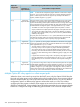
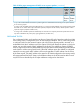
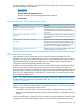

DHCP client request packet inbound to the routing switchOption 82
configuration
Packet includes an Option 82 fieldPacket has no
Option 82 field
NOTE: In networks with multiple relay agents between a client and an Option
82 server, append can be used only if the server supports multiple Option 82
fields in a client request. If the server supports only one Option 82 field in a
request, consider using the keep option.
If the relay agent receives a client request that already has one or more Option
82 fields, keep causes the relay agent to retain such fields and forward the
Append an
Option 82 field
Keep
request without adding another Option 82 field. But if the incoming client request
does not already have any Option 82 fields, the relay agent appends an Option
82 field before forwarding the request. Some applications for keep include:
• The DHCP server does not support multiple Option 82 packets in a client
request, and there are multiple Option 82 relay agents in the path to the server.
• The unusual case where DHCP clients in the network add their own Option
82 fields to their request packets, and you do not want any additional fields
added by relay agents.
This policy does not include the validate option (described in the next section)
and allows forwarding of all server response packets arriving inbound on the
routing switch (except those without a primary relay agent identifier.)
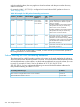
Replace replaces any existing Option 82 fields from downstream relay agents
(and/or the originating client) with an Option 82 field for the current relay agent.
Some applications for replace include:
Append an
Option 82 field
Replace
• The relay agent is located at a point in the network that is a DHCP policy
boundary, and you want to replace any Option 82 fields appended by
down-stream devices with an Option 82 field from the relay agent at the
boundary. (This eliminates downstream Option 82 fields you do not want the
server to use when determining which IP addressing policy to apply to a client
request.)
• In applications where the routing switch is the primary relay agent for clients
that may append their own Option 82 field, you can use replace to delete
these fields if you do not want them included in client requests reaching the
server.
Drop causes the routing switch to drop an inbound client request with an Option
82 field already appended. If no Option 82 fields are present, drop causes the
Append an
Option 82 field
Drop
routing switch to add an Option 82 field and forward the request. As a general
guideline, configure drop on relay agents at the edge of a network, where an
inbound client request with an appended Option 82 field may be unauthorized,
a security risk, or for some other reason, should not be allowed.
Multiple Option 82 relay agents in a client request path
Where the client is one router hop away from the DHCP server, only the Option 82 field from the
first (and only) relay agent is used to determine the policy boundary for the server response. Where
there are multiple Option 82 router hops between the client and the server, you can use different
configuration options on different relay agents to achieve the results you want. This includes
configuring the relay agents so that the client request arrives at the server with either one Option
82 field or multiple fields. (Using multiple Option 82 fields assumes that the server supports multiple
fields and is configured to assign IP addressing policies based on the content of multiple fields.)
242 Dynamic Host Configuration Protocol