
Multicast and Routing Guide K/KA/KB.15.15
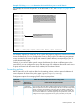
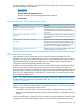

includes multiple subnets, the entry applies to client broadcasts with that port number from any
subnet in the VLAN.
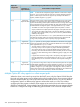
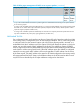
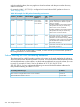
For example, VLAN 1 (15.75.10.1) is configured to forward inbound UDP packets as shown in
Table 30 (page 250).
Table 30 Example of a UDP packet-forwarding environment
NotesUDP
port
Forwarding
address
Subnet mMaskIP addressInterface
Unicast address for forwarding inbound UDP
packets with UDP port 1188 to a specific
device on VLAN 2.
Broadcast address for forwarding inbound
UDP packets with UDP port 1812 to any
device in the 15.75.11.0 network.
1188
1812
1813
15.75.11.43
15.75.11.255
15.75.12.255
255.255.255.015.75.10.1VLAN 1
Broadcast address for forwarding inbound
UDP packets with UDP port 1813 to any
device in the 15.75.12.0 network.
Destination VLAN for UDP 1188 broadcasts
from clients on VLAN 1. The device
N/ANone255.255.255.015.75.11.1VLAN 2
identified in the unicast forwarding address
configured in VLAN 1 must be on this VLAN.
Also the destination VLAN for UDP 1812
from clients on VLAN 1.
Destination VLAN for UDP 1813 broadcasts
from clients on VLAN 1.
N/ANone255.255.255.015.75.12.1VLAN 3
NOTE: If an IP server or subnet entry is invalid, a switch will not try to forward UDP packets to
the configured device or subnet address.
Subnet masking for UDP forwarding addresses
The subnet mask for a UDP forwarding address is the same as the mask applied to the subnet on
which the inbound UDP broadcast packet is received. To forward inbound UDP broadcast packets
as limited broadcasts to other subnets, use the broadcast address that covers the subnet you want
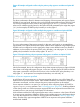
to reach. For example, if VLAN 1 has an IP address of 15.75.10.1/24 (15.75.10.1
255.255.255.0), you can configure the following unicast and limited broadcast addresses for
UDP packet forwarding to subnet 15.75.11.0:
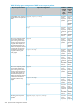
IP addressForwarding destination type
15.75.11.XUDP unicast to a single device in the 15.75.11.0 subnet
15.75.11.255UDP broadcast to subnet 15.75.11.0
250 User Datagram Protocol