
Multicast and Routing Guide K/KA/KB.15.15


Optional transitive Transitive attribute between ASs. A BGP router not
supporting this attribute can still receive routes with this
attribute and advertise them to other peers.
Optional non-transitive If a BGP router does not support this attribute, it will not
advertise routes with this attribute.
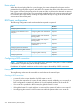
The category of each BGP path attribute is described in the following table.
Table 36 BGP path attributes
CategoryName
Well-known mandatoryORIGIN
Well-known mandatoryAS_PATH
Well-known mandatoryNEXT_HOP
Well-known discretionaryLOCAL_PREF
Well-known discretionaryATOMIC_AGGREGATE
Optional transitiveCOMMUNITY
Optional non-transitiveMULTI_EXIT_DISC (MED)
Optional non-transitiveORIGINATOR_ID
Optional non-transitiveCLUSTER_LIST
Using BGP path attributes
ORIGIN
ORIGIN is a well-known mandatory attribute that defines the origin of routing information, that is,
how a route became a BGP route. There are three types:
IGP Has the highest priority. Routes added to the BGP routing table using the network
command have the IGP attribute.
EGP Has the second highest priority. Routes obtained via EGP have the EGP attribute.
Incomplete Has the lowest priority. The source of routes with this attribute is unknown, which
does not mean such routes are unreachable. The routes that are redistributed
from other routing protocols have this attribute.
AS_PATH
AS_PATH is a well-known mandatory attribute. This attribute identifies the autonomous systems
through which routing information carried in the Update message has passed. When a route is
advertised from the local AS to another AS, each passed AS number is added into the AS_PATH
attribute, allowing the receiver to determine the ASs for routing back the message. The number of
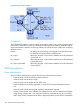
the AS closest to the receiver’s AS is leftmost, as shown in Figure 56 (page 304).
BGP path attributes 303