
Multicast and Routing Guide K/KA/KB.15.15

NOTE:
• BGP implements load sharing only on routes that have the same WEIGHT, LOCAL_PREF,
ORIGIN, AS_PATH, MED and IGP COST.
• BGP load sharing is applicable between eBGP peers and between iBGP peers.
• If multiple routes to the same destination are available, BGP selects the configured number of
routes for load sharing. The maximum number of routes for load sharing is currently 4. Load
sharing is enabled by default.
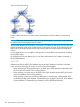
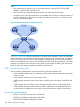
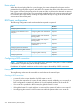
Figure 60 Network diagram for BGP load sharing
In Figure 60 (page 308), Router D and Router E are iBGP peers of Router C. Router A and Router
B both advertise a route destined for the same destination to Router C. If load sharing is configured
and the two routes have the same AS_PATH attribute, ORIGIN attribute, LOCAL_PREF and MED,
Router C installs both the two routes to its route table for load sharing. After that, Router C forwards
to Router D and Router E the route that has AS_PATH unchanged but has NEXT_HOP changed to
Router C; other BGP transitive attributes are those of the best route.
BGP route advertisement rules
The current BGP implementation supports the following route advertisement rules:
• When multiple feasible routes to a destination exist, the BGP speaker advertises only the best
route to its peers.
• A BGP speaker advertises only routes used by itself.
• A BGP speaker advertises routes learned from an eBGP peer to all its peers, both eBGP and
iBGP.
• A BGP speaker does not advertise routes learnt from an iBGP peer to its other iBGP peers.
• A BGP speaker advertises routes learnt from iBGP to eBGP peers. Note that BGP and IGP
synchronization is disabled always and those routes are advertised to eBGP peers directly.
Protocols and standards
• RFC4271: A Border Gateway Protocol 4 (BGP-4)
• RFC3392: Capabilities Advertisement with BGP-4
• RFC2918: Route Refresh Capability for BGP-4
308 Border Gateway Protocol (BGP)