
Multicast and Routing Guide K/KA/KB.15.15
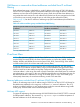
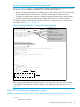

[no]vlanvidip pim
Enables multicast routing on the VLAN interface to which the CLI is currently set.
The no form disables PIM on the VLAN.
Default: Disabled
Specifying the IP address to use as the source address for PIM protocol packets
outbound on the VLAN
Syntax:
[no]ip pim-dense [ ip-addr any | sourceip-address ]
[no]vlan[vid]ip pim-dense [ ip-addr | any |
sourceip-address ]
In networks using multinetted VLANs, all routers on a given VLAN intended to route
multicast packets must have a least one common subnet on that VLAN. Use this
command when the VLAN is configured with multiple IP addresses (multinetting) to
specify the IP address to use as the source address for PIM protocol packets outbound
on the VLAN.
• Use ip-address to designate a single subnet in cases where multicast routers
on the same multinetted VLAN are not configured with identical sets of subnet
IP addresses.
• Use all if the multinetted VLAN is configured with the same set of subnet
addresses.
Default: the primary VLAN
Changing the frequency at which the routing switch transmits PIM hello messages on
the current VLAN
Syntax:
ip pim-dense [ hello-interval 5-30 ]
vlan [vid]ip pim-dense [hello-interval 5-30]
Changes the frequency at which the routing switch transmit PIM hello messages on
the current VLAN. The routing switch uses hello packets to inform neighboring
routers of its presence. The routing switch also uses this setting to compute the hello
hold time, which is included in hello packets sent to neighbor routers. hello hold
time tells neighbor routers how long to wait for the next hello packet from the routing
switch. If another packet does not arrive within that time, the router removes the
neighbor adjacency on that VLAN from the routing table, which removes any flows
running on that interface.
Shortening the hello interval reduces the hello hold time. This has the effect of
changing how quickly other routers will stop sending traffic to the routing switch if
they do not receive a new hello packet when expected.
NOTE: Not used with the [no]form of the ip pim-dense command.
Example:
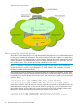
If multiple routers are connected to the same VLAN and the routing switch requests
multicast traffic, all routers on the VLAN receive that traffic. (Those that have pruned
the traffic will drop it when they receive it.)
If the upstream router loses contact with the routing switch receiving the multicast
traffic (that is, fails to receive a hello packet when expected), the shorter hello
40 PIM-DM (Dense Mode)