
Multicast and Routing Guide K/KA/KB.15.15
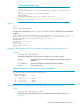
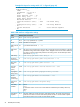
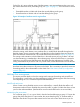

For the flow of a given multicast group, PIM-DM creates a tree structure between the source and
the VLANs where hosts have joined the group, see Figure 10 (page 57). The tree structure consists
of:
• Extended branches to VLANs with hosts that currently belong to the group.
• Pruned branches to VLANs with no hosts that belong to the group.
Figure 10 Example of multicast tree for a given flow
When the routing switch detects a new multicast flow, it initially floods the traffic throughout the
PIM-DM domain, then it prunes the traffic on the branches (network paths) where joins have not
been received from individual hosts. This creates the tree structure shown in Figure 10 (page 57).
The routing switch maintains individual branches in the multicast tree as long as there is at least
one host maintaining a membership in the multicast group. When all of the hosts in a particular
VLAN drop out of the group, PIM-DM prunes that VLAN from the multicast tree. Similarly, if the
routing switch detects a join from a host in a pruned VLAN, it adds that branch back into the tree.
NOTE: Where the multicast routers in a network use one or more multinetted VLANs, there must
be at least one subnet common to all routers on the VLAN. This is necessary to provide a continuous
forwarding path for the multicast traffic on the VLAN. See “PIM VLAN (interface) configuration
context” (page 39).
Multicast flow management
This section provides details on how the routing switch manages forwarding and pruned flows.
This information is useful when you plan topologies to include multicast support and when viewing
and interpreting the show command output for PIM-DM features.
Initial flood and prune
When a router running PIM-DM receives a new multicast flow, it initially floods the traffic to all
downstream multicast routers. PIM-DM then prunes the traffic on paths to VLANs that have no host
joins for that multicast address. (PIM-DM does not re-forward traffic back to its source VLAN.)
Maintaining the prune state
For a multicast group "X" on a given VLAN, when the last host belonging to group "X" leaves the
group, PIM places that VLAN in a prune state; this means that the group "X" multicast traffic is
blocked to that VLAN. The prune state remains until a host on the same VLAN issues a join for
PIM-DM operation 57