
Multicast and Routing Guide K/KA/KB.15.15
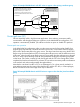

Figure 19 Example PIM-SM domain with RPT active to support a host joining a multicast group
PIM-SM
Router "A"
PIM-SM
Router "B"
PIM-SM
Router "C"
PIM-SM
Router "D"
Source of
Multicast
Group "X"
RPT Path
Host "Y"
Designated Router
(DR) for Unicast Source
of Multicast Group "X"
Rendezvous Point
(RP) Elected To Support
Multicast Group "X"
Edge
Intermediate
Router for
RPT Path for
Group "X"
In default PIM-SM operation, the RPT
path forms to deliver the first multicast
packet from Group "X" to Host "Y".
(Note that any router configured in the
domain as a BSR candidate can be elected
as the BSR.
Shortest-path tree (SPT)
SPTs are especially useful in high data-rate applications where reducing unnecessary traffic
concentrations and throughput delays are significant. In the default PIM-SM configuration, SPT
operation is automatically enabled. (The software includes an option to disable SPT operation.
Shortest-path tree operation
In the default PIM-SM configuration, after an edge router receives the first packet of traffic for a
multicast group requested by a multicast receiver on that router, it uses Reverse Path Forwarding
(RPF) to learn the shortest path to the group source. The edge router then stops using the RPT and
begins using the shortest path tree (SPT) connecting the multicast source and the multicast receiver.
In this case, when the edge router begins receiving group traffic from the multicast source through
the SPT, it sends a prune message to the RP tree to terminate sending the requested group traffic
on that route. (This results in entries for both the RP path and the STP in the routing table.) When
completed, the switchover from the RPT to a shorter SPT can reduce unnecessary traffic concentrations
in the network and reduce multicast traffic throughput delays.
Note that the switchover from RPT to SPT is not instantaneous. For a short period, packets for a
given multicast group may be received from both the RPT and the SPT. Also, in some topologies,
the RPT and the SPT to the same edge router may be identical.
Figure 20 Example PIM-SM domain with SPT active to support a host that has joined a multicast
group
PIM-SM operation and router types 95