
Advanced Traffic Management Guide K/KA/KB.15.15
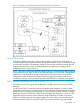


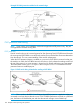
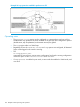

Figure 17 An MSTP network with legacy STP and RSTP devices connected
How MSTP operates
In the factory default configuration, spanning tree operation is off. Also, the switch retains its
currently configured spanning tree parameter settings when disabled. Thus, if you disable spanning
tree, then later re-enable it, the parameter settings will be the same as before spanning tree was
disabled. The switch also includes a "Pending"feature that enables you to exchange MSTP
configurations with a single command.
NOTE: The switch automatically senses port identity and type, and automatically defines spanning
tree parameters for each type, as well as parameters that apply across the switch. Although these
parameters can be adjusted, HP strongly recommends leaving these settings in their default
configurations unless the proposed changes have been supplied by an experienced network
administrator who has a strong understanding of the IEEE 802.1D/w/s standards and operation.
802.1s Multiple Spanning Tree Protocol (MSTP)
The switches covered in this guide use the IEEE 802.1s Multiple Spanning Tree Protocol (MSTP)
standard.
The 802.1D and 802.1w spanning tree protocols operate without regard to a network's VLAN
configuration, and maintain one common spanning tree throughout a bridged network. Thus, these
protocols map one loop-free, logical topology on a given physical topology. The 802.1s Multiple
Spanning Tree protocol (MSTP) uses VLANs to create multiple spanning trees in a network, which
significantly improves network resource utilization while maintaining a loop-free environment.
While the per-VLAN spanning tree approach adopted by some vendors overcomes the network
utilization problems inherent in using STP or RSTP, using a per-VLAN technology with multiple
About MSTP 121