
Advanced Traffic Management Guide K/KA/KB.15.15

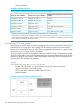

To globally enable RPVST+ on all VLANs on the switch, use either of the following:
spanning-tree [ enable ]
[no] spanning-tree disable
To globally disable RPVST+ on all VLANs on the switch, use any of the following:
[no] spanning-tree
spanning-tree disable
[no] spanning-tree enable
NOTE: This status will always be shown in show run to let you know whether
the spanning-tree is enabled. Having spanning tree present but not enabled will
lead to a change in the existing factory default settings.
NOTE: This command overrides the per-VLAN enable/disable command (below).
Syntax:
spanning-tree vlan vid list [ enable | disable ]
To enable RPVST+ on one or more VLANs on the switch, use either of the following:
spanning-tree vlan vid list enable
[no] spanning-tree vlan vid list disable
To disable RPVST+ on one or more VLANs on the switch, use any of the following:
[no] spanning-tree vlan vid list
spanning-tree vlan vid list disable
[no] spanning-tree vlan vid list enable
Configuring BPDU filtering
The STP BPDU filter feature allows control of spanning tree participation on a per-port basis. It can
be used to exclude specific ports from becoming part of spanning tree operations. A port with the
BPDU filter enabled will ignore incoming BPDU packets on all VLANs where the port is a member,
and stay locked in the spanning tree forwarding state. All other ports will maintain their role.
Syntax:
[no] spanning-tree [ port-list | all ] bpdu-filter
Enables/disables BPDU filtering on the specified port(s). The bpdu-filter option
forces a port to always stay in the forwarding state and be excluded from standard
STP operation.
Sample scenarios in which this feature may be used:
• To have STP operations running on selected ports of the switch rather than
every port of the switch at a time.
• To prevent the spread of errant BPDU frames.
• To eliminate the need for a topology change when a port's link status changes.
For example, ports that connect to servers and workstations can be configured
to remain outside of spanning tree operations.
• To protect the network from denial of service attacks that use spoofing BPDUs
by dropping incoming BPDU frames. For this scenario, BPDU protection offers
136 Rapid per-VLAN spanning tree (RPVST+) operation