
Advanced Traffic Management Guide K/KA/KB.15.15

Examples
Example 149 show qos type-of-service
An edge switch A in an untagged VLAN assigns a DSCP of 000110 on IP packets it receives on
port A6, and handles the packets with high priority (7). When these packets reach interior switch
B you want the switch to handle them with the same high priority. To enable this operation you
would configure an 802.1p priority of 7 for packets received with a DSCP of 000110, and then
enable diff-services:
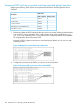
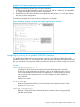
Figure 37 Viewing the codepoints available for 802.1p priority assignments
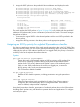
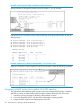
Figure 38 Type-of-Service configuration that enables both 802.1p priority and DSCP policy
assignment
Assigning a DSCP policy for a global IP-Diffserv classifier
The preceding section describes how to forward an 802.1p priority level set by an edge (or
upstream) switch. This section describes how to use a global IP-Diffserv classifier to mark matching
packets with a new DSCP policy. A DSCP policy consists of a DSCP codepoint and an associated
802.1p priority.
You can use a global IP-Diffserv classifier to mark a DSCP policy at the same time with a global
IP-Diffserv classifier that marks an 802.1p priority if different DSCP codepoints are configured with
each classifier.
To use a global IP-Diffserv classifier to mark matching packets with a new DSCP policy, follow
these steps:
1. Identify the DSCP used to set a policy in packets received from an upstream or edge switch.
2. Create a new policy by using the qos dscp-map code-point priority 0 - 7
command to configure an 802.1p priority for the codepoint you will use to overwrite the DSCP
that the packet carries from upstream.
Assigning a DSCP policy for a global IP-Diffserv classifier 205