
Advanced Traffic Management Guide K/KA/KB.15.15
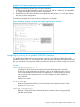
3. Use the qos type-of-service diff-services incoming-DSCP dscp
outgoing-DSCP command to change the policy on packets coming from the edge or upstream
switch with the specified incoming DSCP.
Figure 56 (page 252) illustrates this scenario.
Syntax:
qos type-of-service diff-services
Enables ToS Diff-services.
Syntax:
qos type-of-service diff-services current-codepoint dscp new-codepoint
Configures the switch to select an incoming IP packet carrying the
current-codepoint and then use the new-codepoint to assign a new,
previously configured DSCP policy to the packet. The policy overwrites the
current-codepoint with the new-codepoint and assigns the 802.1p priority
specified by the policy.
Valid values for a DSCP codepoint are as follows:
• A binary value for the six-bit codepoint from 000000 to 111111.
• A decimal value from 0 (low priority) to 63 (high priority) that corresponds to
a binary DSCP bit set
• An ASCII standard (hexadecimal) name for a binary DSCP bit set
Enter ? to display the list of valid codepoint entries.
To reconfigure the 802.1p priority currently assigned to a DSCP codepoint,
use the qos dscp-map command.
Syntax:
no qos type-of-service
Disables all ToS classifier operation. Current ToS DSCP policies and priorities remain
in the configuration and will become available if you re-enable ToS Diff-services.
Syntax:
no qos type-of-service [diff-services codepoint]
Deletes the DSCP policy assigned to the codepoint and returns the codepoint
to the 802.1p priority setting it had before the DSCP policy was assigned, which
is either a value from 0 - 7 or No-override.
Syntax:
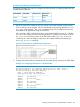
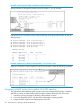
show qos type-of-service
Displays a listing of codepoints with any corresponding DSCP policy reassignments
for outbound packets. Also displays the 802.1p priority for each codepoint that
does not have a DSCP policy assigned to it.
206 Quality of Service: Managing bandwidth effectively