
Advanced Traffic Management Guide K/KA/KB.15.15

In the switches covered in this guide, the default QoS configuration includes some codepoints,
such as Assured Forwarding and Expedited Forwarding, that are preconfigured with an
802.1p priority setting. All other codepoints are not configured with an 802.1p priority and
display No-override.
Use the qos dscp map command to configure the switch to assign different 802.1p priorities
to IP packets with different codepoints. Also, you can configure the switch to assign a new
codepoint with its associated priority level (0-7) to matching packets as follows:
1. Configure a DSCP codepoint with the desired priority in an edge switch.
2. Configure the local switch to mark specified inbound traffic with the DSCP (and thus
create a policy for that traffic type).
3. Configure the internal switches in your LAN to honor the policy.
For example, you could configure an edge switch to assign a codepoint of 000001 to all
packets received from a specific VLAN, and then handle all traffic with that codepoint at high
priority.
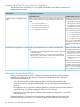
• Precedence Bits
A subset of the DSCP codepoint, consisting of the upper three bits of the ToS/Traffic Class
byte. When a global IP-Precedence classifier is configured, the switch uses the precedence
bit set to determine the priority for selected packets as shown in the following table. (The switch
does not change the setting of the precedence bits.)
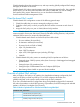
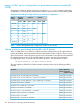
Table 22 IP precedence-to-802.1p priority mapping
Service Priority
Level
Corresponding
802.1p Priority
ToS/Traffic Class
Byte: IP
Precedence Bits
Lowest1000
Low2001
Normal0002
3003
4004
5005
6006
Highest7007
NOTE: Using a global IP-Precedence classifier to prioritize IP packets relies on priorities set
in upstream devices and applications.
Figure 55 (page 252) shows the difference between the diffserv bits and precedence bits in an
IPv4 ToS byte and an IPv6 Traffic Class byte. Note that:
• Precedence bits are a subset of the Differentiated Services bits.
• The right-most two bits are reserved.
IPv4 ToS/IPv6 traffic class byte 251