
Advanced Traffic Management Guide K/KA/KB.15.15



9 QinQ (Provider bridging)
NOTE: All commands previously in the Summary of commands table are indexed under the entry
Command syntax.
Introduction
This chapter describes how to enable QinQ operations on the switch and how to configure provider
bridge S-VLANs and port assignments.
The IEEE 802.1ad specification, commonly known as QinQ or provider bridging, extends the IEEE
802.1Q standard by providing for a second tier of VLANs in a bridged network. The general
purpose of QinQ is to allow frames from multiple customers to be forwarded (or tunneled) through
another topology (provider network) using service VLANs or S-VLANs. The provider bridge, which
may comprise multiple devices in the service provider domain, looks like a simple bridge port to
the customer's traffic and maintains the customer's VLANs.
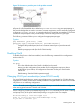
Figure 74 (page 322) shows a sample QinQ topology and use model. Customer A has LANs spread
across multiple site locations and may want to link them together in a single logical LAN. To do
this, the customer could have a cable laid out for the entire distance interconnecting the three sites.
A more cost-effective and scalable alternative, however, would be to tunnel frames through the
provider's network to interconnect all the sites subscribing to the service. This solution can be
delivered using QinQ.
Figure 74 QinQ network diagram
:
The Service Provider and customers may belong to the same business entity, as in the case where
a single enterprise uses QinQ to help segregate local networks and increase the scalability of their
backbone infrastructure.
How QinQ works
Under QinQ, the provider network operates on a different VLAN space, independent of the VLANs
that are used in the customer network.
322 QinQ (Provider bridging)