
Advanced Traffic Management Guide K/KA/KB.15.15



Example 219 How IPv6 mask bit settings define a match
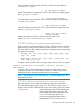
For an example in which an IPv6 prefix-length of 126 is used to select four IPv6 addresses in a
match statement, see Figure 86. The specified source IPv6 address is:
2001:DB8:0000:0000:244:17FF:FEB6:D37D. The IPv6 prefix-length (/126) results in the
IPv6 mask: FFFF:FFFF:FFFF:FFFF:FFFF:FFFF:FFFF:FFFC.
Figure 86 Mask for matching four IPv6 devices
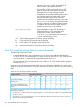
To see the on and off settings in the last block of the resulting IPv6 mask that determine the matching
IPv6 addresses, see Figure 86. In this mask, all bits except the last two are set to 1 (on) and must
be the same in an IPv6 address. The binary equivalent of hexadecimal C is 1100, which allows
the last two bits to differ.
Figure 87 How a mask determines four authorized IPv6 manager addresses
To see how the binary equivalent (1100) of the C value in the last block of the resulting IPv6 mask
supports four possible combinations (D37C, D37D, D37E, and D37F) in the last block of a matching
IPv6 address, see Figure 88. Therefore, the IPv6 mask that results from a /126 prefix-length matches
inbound traffic from four IPv6-based devices.
Figure 88 How hexadecimal C in an IPv6 mask matches four IPv6 addresses
For more detailed information on how to use CIDR notation to specify masks in match criteria, see
the Access Security Guide.
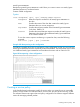
Resequencing match/ignore statements
Use the class command with the resequence option to reconfigure the number at which the
first match/ignore statement in the class starts, and reset the interval used to number other
354 Classifier-based software configuration