
Advanced Traffic Management Guide K/KA/KB.15.15
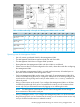

switch drops the packet. This is not a problem for a switch with a multiple forwarding database,
because the switch allows multiple instances of a given MAC address; one for each valid destination.
However, a switch with a single forwarding database allows only one instance of a given MAC
address.
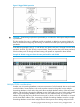
If (1) two types of switches connect through multiple ports or trunks belonging to different VLANs,
and (2) routing is enabled on the switch having the multiple forwarding database then, on the
switch having the single forwarding database, the port and VLAN record it maintained for the
connected multiple-forwarding-database switch on the switch having the single forwarding database,
maintains for the connected multiple-forwarding-database switch can frequently change. This causes
poor performance and the appearance of an intermittent or broken connection.
802.1Q VLAN tagging
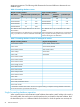
• The switch requires VLAN tagging on a given port if more than one VLAN of the same type
uses the port. When a port belongs to two or more VLANs of the same type, they remain as
separate broadcast domains and cannot receive traffic from each other without routing.
NOTE: If multiple,non-routable VLANs exist in the switch—such as NETbeui protocol
VLANs—they cannot receive traffic from each other under any circumstances.
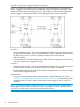
• The switch requires VLAN tagging on a given port if the port will be receiving inbound, tagged
VLAN traffic that should be forwarded. Even if the port belongs to only one VLAN, it forwards
inbound tagged traffic only if it is a tagged member of that VLAN.
• If the only authorized, inbound VLAN traffic on a port arrives untagged, then the port must
be an untagged member of that VLAN. This is the case where the port is connected to a non
802.1Q-compliant device or is assigned to only one VLAN.
Introducing tagged VLAN technology into networks running untagged VLANs 53