
Advanced Traffic Management Guide K/KA/KB.15.15
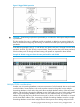
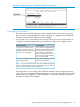
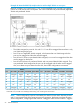
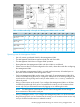
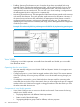

Example 43 VLAN ID numbers assigned in the VLAN names screen
VLAN tagging considerations:
• Since the purpose of VLAN tagging is to allow multiple VLANs on the same port, any port
that has only one VLAN assigned to it can be configured as "Untagged" (the default) if the
authorized inbound traffic for that port arrives untagged.
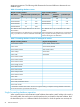
• Any port with two or more VLANs of the same type can have one such VLAN assigned as
"Untagged." All other VLANs of the same type must be configured as "Tagged," that is:
Protocol VLANsPort-Based VLANs
A port can be an untagged member
of one protocol-based VLAN of each
A port can be a member of one
untagged, port-based VLAN. All
protocol type. When assigning aother port-based VLAN assignments
for that port must be tagged. port to multiple, protocol-based
VLANs sharing the same type, the
port can be an untagged member
of only one such VLAN.
A port can be a tagged member of
any protocol-based VLAN.
A port can be a tagged member of
any port-based VLAN.
NOTE: A given VLAN must have the same VID on all 802.1Q-compliant
devices in which the VLAN occurs. Also, the ports connecting two 802.1Q
devices should have identical VLAN configurations.
• If all end nodes on a port comply with the 802.1Q standard and are configured to use the
correct VID, you can configure all VLAN assignments on a port as "Tagged" if doing so either
makes it easier to manage your VLAN assignments, or if the authorized, inbound traffic for
all VLANs on the port will be tagged.
Introducing tagged VLAN technology into networks running untagged VLANs 55